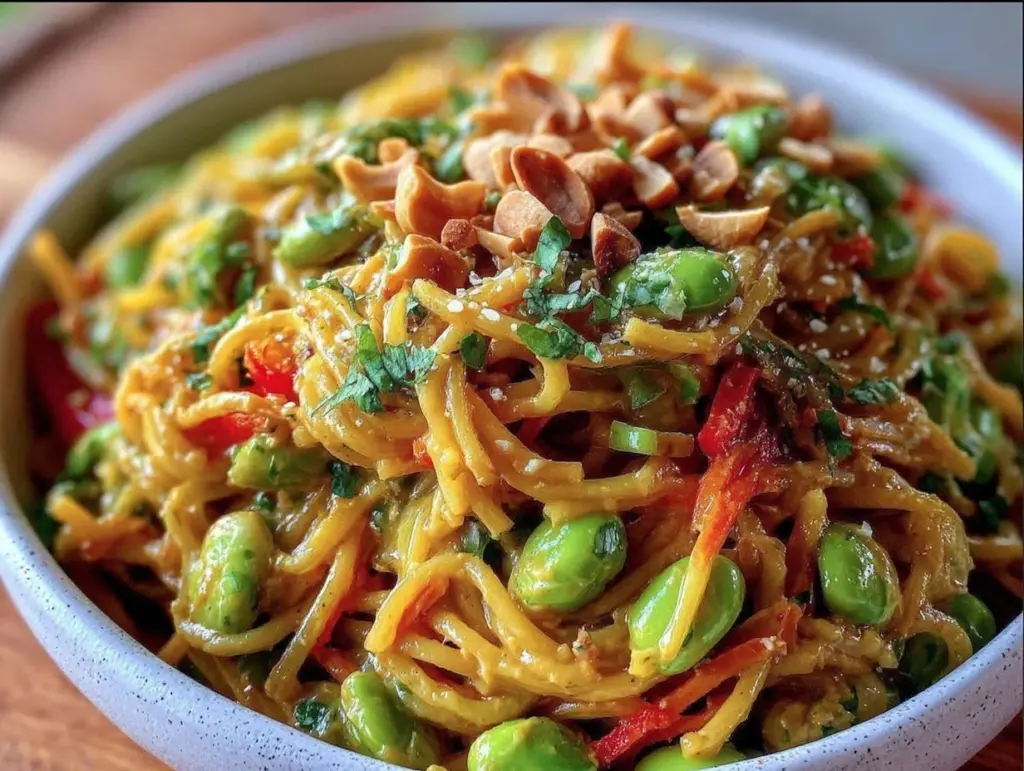
“You’ve got five minutes, right? Just toss whatever’s in the fridge together.” That’s what my friend Sarah said, half-joking, the night she texted me her version of this Easy Creamy Asian Peanut Noodle Salad with Edamame. Honestly, I was skeptical—peanut sauce and noodles? I thought it would be a sticky mess or too heavy for a summer dinner. But after making it three times in one week (not kidding), I realized this salad isn’t just quick; it’s a cool, creamy, satisfying reset on those hectic evenings when you need something fresh but filling.
I remember standing over the bowl, the tangy peanut aroma mingling with the snap of edamame pods, and thinking, “Why didn’t I try this sooner?” The combination of textures—soft noodles, crunchy peanuts, and tender edamame—made it one of those rare dishes that feels like a little celebration in your mouth. Plus, it’s one of those recipes you can tweak easily, whether you’re craving more heat, a hint of citrus, or a touch of sweetness.
It’s funny how something that started as a “throw-it-together” dinner became a go-to summer staple. And honestly, it’s the kind of dish that sticks around in your meal rotation because it’s just that good—not too fussy but with personality. There’s a quiet satisfaction in knowing you can whip up something this tasty and creamy without breaking a sweat. It’s comfort food that feels light, perfect for warm evenings or potlucks with friends.
So here’s the thing: this Easy Creamy Asian Peanut Noodle Salad with Edamame is more than just a recipe. It’s a little discovery of flavor and ease, the kind that makes you trust your kitchen instincts a bit more. And once you try it, well, you might find yourself making it just as often as I do.
Why You’ll Love This Recipe
This Easy Creamy Asian Peanut Noodle Salad with Edamame ticks so many boxes, it practically makes itself a favorite. After testing and tasting multiple versions, I can say with confidence this one shines for a bunch of reasons:
- Quick & Easy: Ready in about 20 minutes, it’s perfect for busy weeknights or when you want a fuss-free meal without sacrificing flavor.
- Simple Ingredients: You probably have most of these in your pantry already—no need for specialty trips!
- Perfect for Summer Meals: Whether it’s a backyard barbecue, picnic, or just a light dinner, this salad feels refreshing but satisfying.
- Crowd-Pleaser: I’ve brought this to potlucks, and it always disappears fast. Kids and adults alike love the creamy peanut sauce paired with the fresh veggies.
- Unbelievably Delicious: The creamy, nutty sauce combined with the slight crunch of edamame and noodles creates a texture and flavor balance that’s downright addictive.
What makes this recipe stand out is the peanut sauce itself—a blend that’s smooth but not overpowering, lightly sweet with a hint of tang, and just enough zing from fresh lime juice. I prefer using freshly ground peanut butter (Jif Natural works great) and adding a splash of soy sauce to keep that umami depth. Unlike some versions that get heavy with mayo or too much sugar, this one keeps it balanced and fresh.
And honestly, the edamame is a game-changer. It adds that pop of green and a protein boost, making this salad not just a side but a full meal. If you love dishes like the Fresh Lemon Asparagus Pasta, you’ll appreciate how this noodle salad marries creamy and crisp in a totally satisfying way.
It’s more than just food—it’s that quiet comfort you find in a dish that’s both familiar and exciting, creamy but light. The kind of recipe that makes you want to make it again before the season even ends.
What Ingredients You Will Need
This Easy Creamy Asian Peanut Noodle Salad with Edamame uses simple, wholesome ingredients to deliver bold flavor and satisfying texture without the fuss. Most are pantry staples, with a few fresh touches that bring everything to life.
- Rice Noodles (8 oz / 225 g): Thin rice vermicelli noodles work best for their delicate texture. Look for brands like Thai Kitchen for consistent results.
- Edamame (1 cup / 150 g): Shelled, cooked edamame adds a fresh pop of green and protein. Frozen is fine—just thaw before use.
- Peanut Butter (1/3 cup / 80 ml): Creamy natural peanut butter is key for that silky, rich sauce. Avoid overly sweetened varieties.
- Soy Sauce (3 tbsp / 45 ml): Use low sodium soy sauce to keep the salt in check, adding a deep umami note.
- Rice Vinegar (2 tbsp / 30 ml): Adds tang and brightness to balance the richness.
- Honey or Maple Syrup (1 tbsp / 15 ml): Just a touch for subtle sweetness—can swap for agave nectar if preferred.
- Sesame Oil (1 tbsp / 15 ml): Toasted sesame oil brings that classic nutty aroma.
- Garlic (2 cloves): Minced fresh garlic adds savory depth.
- Fresh Lime Juice (2 tbsp / 30 ml): Brightens and lifts the whole dish—don’t skip this fresh zing!
- Grated Ginger (1 tsp / 5 ml): Adds warmth and subtle spice.
- Sriracha or Chili Flakes (optional, to taste): For those who like a little kick.
- Green Onions (2, sliced): Fresh and crisp for garnish.
- Chopped Peanuts (1/4 cup / 30 g): Adds crunch and texture on top.
- Fresh Cilantro (optional, handful): For garnish and fresh herbal note.
If you want to switch it up, almond butter can replace peanut butter for a milder flavor. For a gluten-free option, tamari works instead of soy sauce. And in summer, tossing in some julienned bell peppers or shredded carrots adds vibrant color and crunch.
Equipment Needed
- Large Pot: For boiling noodles and edamame. A wide pot helps noodles cook evenly.
- Colander or Strainer: To drain noodles and edamame quickly and thoroughly.
- Mixing Bowl: Big enough to toss all ingredients with the peanut sauce comfortably.
- Whisk or Fork: For blending the peanut sauce smooth and lump-free.
- Measuring Spoons and Cups: Precision helps balance the tang and sweetness in the sauce.
- Sharp Knife and Cutting Board: For slicing green onions, ginger, and any extra veggies.
If you don’t have a whisk, a fork works just fine for mixing the sauce. For budget-friendly options, basic stainless steel pots and bowls from any kitchen store will do the trick. Just make sure to rinse noodles in cold water immediately after cooking to keep them from sticking.
Preparation Method
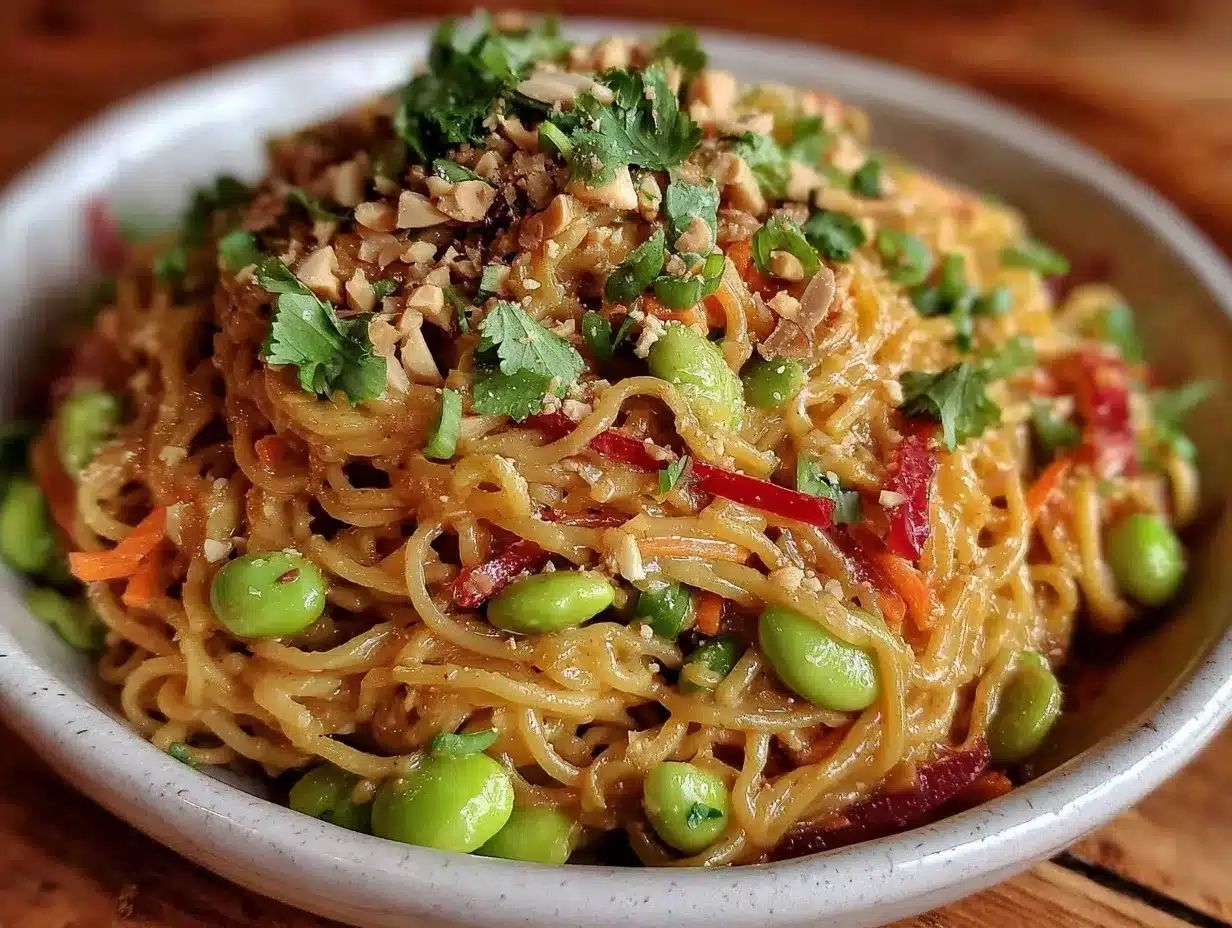
- Cook the Noodles and Edamame (10 minutes): Bring a large pot of water to a boil. Add the rice noodles and cook according to package instructions—usually about 4-5 minutes until tender but still a bit firm. In the last 2 minutes, add the frozen shelled edamame to the pot to cook through. Drain everything in a colander and rinse under cold water to stop cooking and prevent sticking. Let drain thoroughly.
- Make the Peanut Sauce (5 minutes): In a mixing bowl, combine 1/3 cup creamy peanut butter, 3 tbsp low sodium soy sauce, 2 tbsp rice vinegar, 1 tbsp honey (or maple syrup), 1 tbsp toasted sesame oil, minced garlic, grated ginger, and fresh lime juice. Whisk vigorously until smooth and creamy. If the sauce feels too thick, add a teaspoon of warm water at a time until you reach your desired consistency. For a spicy touch, stir in sriracha or chili flakes to taste.
- Toss Noodles and Sauce (3 minutes): Add the drained noodles and edamame to the bowl with the peanut sauce. Toss gently but thoroughly until every strand and bean is coated in that creamy goodness. The noodles should glisten with sauce but not be swimming in it.
- Garnish and Serve (2 minutes): Sprinkle sliced green onions, chopped peanuts, and fresh cilantro (if using) over the top. Give one last gentle toss. Serve immediately chilled or at room temperature. The salad keeps well in the fridge for up to two days, though the peanuts are best fresh.
Tip: When cooking noodles, watch the clock closely—overcooked rice noodles get mushy fast. Also, rinsing with cold water is critical to keep that perfect chewy texture. If your peanut sauce looks grainy, a quick whisk with a splash of warm water usually smooths it out.
Cooking Tips & Techniques
Making this Easy Creamy Asian Peanut Noodle Salad with Edamame really comes down to balance and timing. Here are some tips I learned after a few trial runs:
- Don’t Skip the Cold Rinse: After boiling, rinsing noodles under cold water stops cooking and prevents them from sticking together. Trust me, it makes all the difference.
- Adjust Sauce Thickness: The peanut sauce should coat the noodles lightly. If too thick, thin it out gradually with warm water or extra lime juice. Too thin? Add a bit more peanut butter or honey.
- Fresh Garlic and Ginger Matter: Using freshly minced garlic and grated ginger gives the sauce a brightness that jarred pastes just can’t match.
- Edamame Texture: Cooking edamame just until tender keeps that satisfying snap. Overcooked beans get mushy and lose their vibrant color.
- Multitask Efficiently: While noodles boil, prep the sauce and chop garnishes to save a few minutes.
- Store Separately If Needed: If prepping ahead, keep sauce and noodles separate until serving to avoid sogginess.
One time, I accidentally added too much soy sauce and ended up balancing it out with extra lime and a pinch of sugar. It turned out better than the original! So don’t be afraid to adjust seasoning bit by bit. Also, if you love a little crunch, adding chopped peanuts just before serving preserves their texture better than mixing them in early.
Variations & Adaptations
This recipe is a great base for customization, depending on your mood or dietary needs. Here are some of my favorite variations:
- Protein Boost: Add grilled chicken, shrimp, or tofu for a heartier meal. I love tossing in some shredded crispy garlic chicken for extra flavor and texture.
- Veggie Swap: Use shredded carrots, thin cucumber slices, or bell peppers instead of or alongside edamame. In summer, fresh snap peas work beautifully, too.
- Spicy Kick: Amp up the heat with extra sriracha, chili oil, or fresh chopped jalapeños. For a smoky twist, a dash of smoked paprika blends surprisingly well.
- Nut-Free: Substitute sunflower seed butter or tahini for peanut butter to accommodate allergies without losing creaminess.
- Grain-Free: Swap rice noodles with zucchini noodles or shirataki noodles for a low-carb option.
Once, I tried adding toasted coconut flakes on top for a tropical vibe, which was a fun surprise. Feel free to experiment with herbs like Thai basil or mint for a fresh twist. This salad is forgiving and welcomes your creativity.
Serving & Storage Suggestions
This Easy Creamy Asian Peanut Noodle Salad with Edamame is best served chilled or at room temperature, making it ideal for summer meals or potlucks. I usually plate it in a large shallow bowl or pretty glass dish, garnished with extra peanuts and lime wedges on the side for those who want an extra zing.
Pair it with light grilled proteins like salmon or chicken (the honey lime grilled salmon is a favorite) or keep it simple as a refreshing standalone meal. It also works great alongside crispy baked parmesan chicken tenders for a satisfying dinner plate.
For storage, keep the salad in an airtight container in the refrigerator for up to 2 days. If possible, store the chopped peanuts separately and add them just before serving to keep their crunch. To reheat, gently warm the noodles in the microwave or enjoy them cold—both ways work.
Flavors actually deepen overnight, as the peanut sauce soaks into the noodles, but the salad can get a bit drier. Adding a splash of soy sauce or lime juice before serving helps refresh it.
Nutritional Information & Benefits
Per serving (makes about 4 servings): approximately 350 calories, 14g protein, 45g carbohydrates, and 12g fat.
This recipe packs a good amount of plant-based protein thanks to the edamame and peanut butter, making it a balanced meal option. Edamame is rich in fiber, vitamins, and minerals like folate and iron, while peanuts offer heart-healthy fats and antioxidants.
It’s naturally gluten-free if you use gluten-free soy sauce or tamari, and can easily be made vegan by swapping honey for maple syrup. The fresh lime and ginger add digestive benefits and a refreshing zing, making this salad as nourishing as it is flavorful.
From a wellness perspective, this dish feels indulgent but doesn’t weigh you down—a refreshing choice when you want to eat clean without missing out on taste or satisfaction.
Conclusion
This Easy Creamy Asian Peanut Noodle Salad with Edamame is one of those meals that makes busy weeknights a little easier and summer dinners a lot more delicious. Its creamy peanut sauce, fresh edamame, and tender noodles combine for a dish that’s quick, satisfying, and packed with flavor.
Feel free to personalize it—add your favorite veggies, proteins, or spice level. It’s the kind of recipe that adapts to your kitchen and your cravings, which is why I keep coming back to it again and again.
If you enjoy this, you might also appreciate the bright notes in the Copycat Starbucks Strawberry Açaí Refresher or the zesty sweetness of Creamy Key Lime Pie Bars to round out a summer meal.
Give this salad a try and let me know how you make it your own. There’s a simple joy in discovering a recipe that feels like home—creamy, crunchy, fresh, and just right for the season.
FAQs
- Can I make this salad ahead of time? Yes! Prepare the noodles and sauce separately and combine just before serving for best texture.
- Is this recipe gluten-free? It can be if you use gluten-free soy sauce or tamari and confirm all ingredients are gluten-free.
- What can I substitute for edamame? Shelled peas, green beans, or snap peas work well as alternatives.
- How spicy is the salad? It’s mild by default, but you can add sriracha or chili flakes to suit your heat preference.
- Can I use other noodles? Yes, soba or whole wheat noodles can be used, but the texture and flavor will vary slightly.
Pin This Recipe!
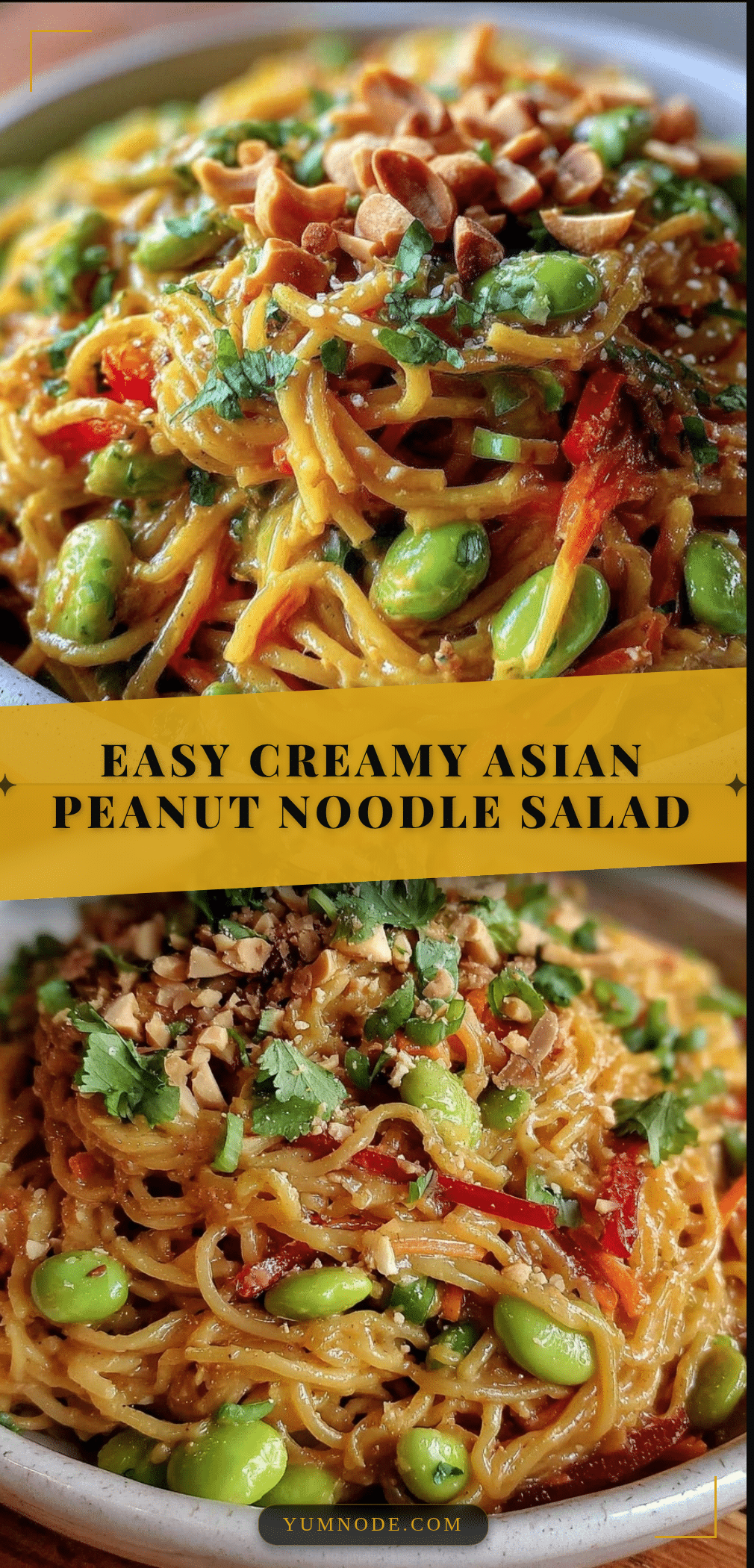
Easy Creamy Asian Peanut Noodle Salad Recipe with Edamame for Summer Meals

A quick, creamy, and refreshing Asian peanut noodle salad featuring edamame, perfect for summer meals and busy weeknights. This salad combines soft noodles, crunchy peanuts, and tender edamame with a balanced peanut sauce.
- Prep Time: 10 minutes
- Cook Time: 10 minutes
- Total Time: 20 minutes
- Yield: 4 servings 1x
- Category: Main Course, Salad
- Cuisine: Asian
Ingredients
- 8 oz (225 g) rice noodles (thin rice vermicelli)
- 1 cup (150 g) shelled, cooked edamame (thawed if frozen)
- 1/3 cup (80 ml) creamy natural peanut butter
- 3 tbsp (45 ml) low sodium soy sauce
- 2 tbsp (30 ml) rice vinegar
- 1 tbsp (15 ml) honey or maple syrup
- 1 tbsp (15 ml) toasted sesame oil
- 2 cloves garlic, minced
- 2 tbsp (30 ml) fresh lime juice
- 1 tsp (5 ml) grated ginger
- Sriracha or chili flakes (optional, to taste)
- 2 green onions, sliced
- 1/4 cup (30 g) chopped peanuts
- Fresh cilantro (optional, handful)
Instructions
- Bring a large pot of water to a boil. Add the rice noodles and cook according to package instructions, about 4-5 minutes until tender but still firm.
- In the last 2 minutes of cooking noodles, add the frozen shelled edamame to the pot to cook through.
- Drain noodles and edamame in a colander and rinse under cold water to stop cooking and prevent sticking. Let drain thoroughly.
- In a mixing bowl, combine peanut butter, soy sauce, rice vinegar, honey or maple syrup, toasted sesame oil, minced garlic, grated ginger, and fresh lime juice. Whisk vigorously until smooth and creamy.
- If the sauce is too thick, add warm water a teaspoon at a time until desired consistency is reached. Stir in sriracha or chili flakes if using.
- Add the drained noodles and edamame to the peanut sauce. Toss gently but thoroughly until evenly coated.
- Sprinkle sliced green onions, chopped peanuts, and fresh cilantro (if using) over the top. Toss gently again.
- Serve immediately chilled or at room temperature.
Notes
Rinse noodles under cold water immediately after cooking to prevent sticking and maintain texture. Adjust peanut sauce thickness with warm water or lime juice as needed. Store sauce and noodles separately if preparing ahead to avoid sogginess. Add chopped peanuts just before serving for best crunch.
Nutrition
- Serving Size: About 1 cup per serv
- Calories: 350
- Fat: 12
- Carbohydrates: 45
- Protein: 14
Keywords: Asian peanut noodle salad, edamame salad, creamy peanut sauce, summer salad, quick dinner, vegetarian, gluten-free option