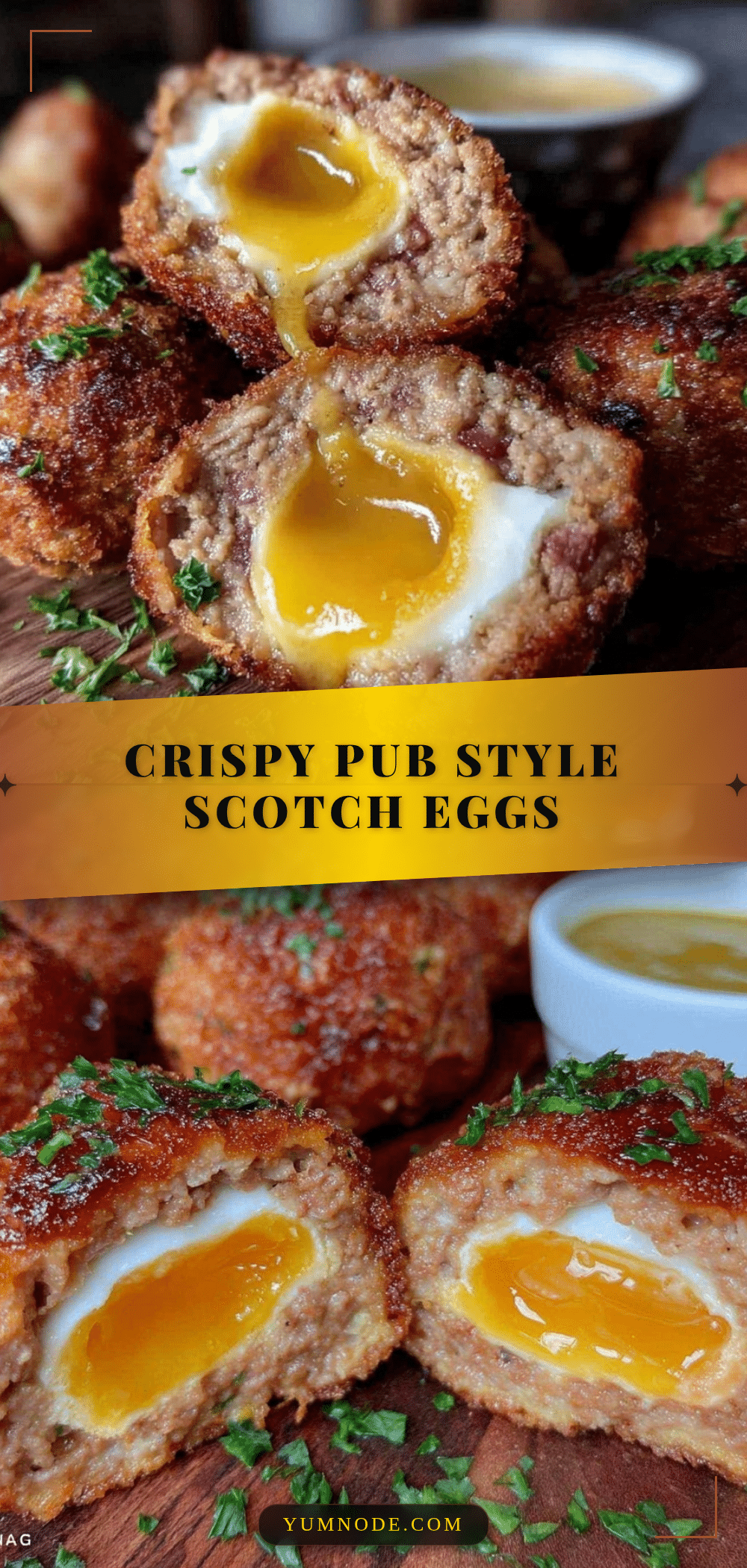
“Hold the phone—are these Scotch eggs supposed to be this crispy on the outside and still oozy in the middle?” I remember muttering that to myself the first time I made this pub-style recipe. Honestly, I was skeptical about getting that perfect runny yolk without turning the whole thing into a greasy mess. But after a few trials, a bit of tweaking, and one especially chaotic Sunday afternoon when I barely had time to cook, these crispy Scotch eggs became my go-to snack and party pleaser.
It wasn’t just about the crunch or the golden crust. There’s something about biting into that warm, tender sausage-blanketed egg and having that liquid yolk spill out just right—it’s oddly comforting, like a hug from a favorite pub’s kitchen. I’ve found myself whipping these up multiple times in a week, much to the amusement of friends who started calling me the “Scotch egg wizard.”
What’s wild is how this recipe came from a mix of impatience and a little too much faith in my frying skills. The first batch was a bit of a disaster—overcooked yolks and soggy coating—but sticking with it taught me that timing and technique make all the difference. Now, every crispy Scotch egg I make has that perfect bite, the kind that gets people asking for seconds without fail. If you’re ready to nail that pub-style Scotch egg magic, you’re in the right place.
Why You’ll Love This Recipe
This crispy Scotch eggs recipe isn’t just another fried snack—it’s a tried-and-true method that brings pub-quality results right to your kitchen. After testing countless versions, I’ve honed this recipe to strike the perfect balance between crispiness and that luscious runny yolk. Here’s why you’ll find yourself making these again and again:
- Quick & Easy: Ready in under 40 minutes, it’s fantastic for a last-minute appetizer or a hearty snack after work.
- Simple Ingredients: You don’t need fancy stuff—just good-quality sausage meat, fresh eggs, and pantry basics.
- Perfect for Gatherings: Whether it’s a casual weekend hangout or a festive potluck, these Scotch eggs always steal the show.
- Crowd-Pleaser: Kids love the crispy shell, while adults appreciate the rich sausage and runny yolk combo.
- Unbelievably Delicious: The contrast of textures—the crunchy coating and the creamy center—makes each bite memorable.
What really sets this recipe apart is the technique of gently boiling the eggs so the yolks stay runny, paired with a double-coating method that locks in crispiness without excess oiliness. Plus, the seasoning mix in the sausage layer isn’t your typical blend—it’s got a hint of smoky paprika and fresh herbs that add a subtle pub-style charm. Honestly, this recipe turns a humble Scotch egg into something you’ll want to savor slowly.
What Ingredients You Will Need
This recipe uses simple, wholesome ingredients to deliver bold flavor and satisfying texture without the fuss. Most of these are pantry staples, and you can find fresh sausage meat easily at any grocery store or butcher.
- Large eggs (6, plus 1 beaten egg for coating) – choose farm-fresh if possible for the best yolk color
- Sausage meat (1 lb / 450 g) – I prefer a good-quality pork sausage with some herbs; avoid overly spicy varieties
- Plain flour (½ cup / 60 g) – for initial dusting
- Breadcrumbs (1 ½ cups / 150 g) – panko breadcrumbs give the crispiest crust; feel free to swap with gluten-free if needed
- Smoked paprika (1 tsp) – adds a subtle smoky flavor, key to that pub-style vibe
- Fresh parsley (2 tbsp, finely chopped) – brightens the sausage meat with fresh herb notes
- Salt & black pepper – to taste, seasoning the sausage and coating
- Vegetable oil (for frying) – enough for shallow frying; use a neutral oil with a high smoke point
Optional substitutions: Use turkey or chicken sausage meat for a lighter version, or swap panko for crushed cornflakes for a different crunch. If you want to add a bit of heat, a pinch of cayenne pepper in the sausage mix works wonders.
Equipment Needed
- Medium saucepan – for gently boiling the eggs
- Large mixing bowl – to mix sausage meat and herbs
- Shallow bowls or plates – for flour, beaten egg, and breadcrumbs (for the breading station)
- Slotted spoon or spider strainer – to safely handle eggs during boiling and frying
- Deep frying pan or skillet – for shallow frying the Scotch eggs; a heavy-bottomed pan works best for even heat
- Thermometer (optional) – to monitor oil temperature around 350°F / 175°C
- Cooling rack or paper towels – to drain excess oil after frying
If you don’t have a thermometer, test the oil by dropping a small bit of breadcrumb—it should sizzle immediately but not burn. A cast-iron skillet is my personal favorite for frying because it holds heat steady. For a budget-friendly tip, use a deep-sided frying pan you already own instead of a dedicated fryer.
Preparation Method

- Boil the eggs: Gently place 6 large eggs into a saucepan filled with cold water. Bring to a simmer and cook for exactly 6 minutes for runny yolks (7 minutes if you prefer slightly firmer). Immediately transfer eggs to an ice bath and let cool for 5 minutes. This stops cooking and makes peeling easier.
- Peel the eggs carefully: Tap eggs gently all over and peel under running cold water to avoid tearing the white. Set aside.
- Prepare the sausage mixture: In a large bowl, mix 1 lb (450 g) sausage meat with 1 tsp smoked paprika, 2 tbsp chopped parsley, salt, and pepper. Use your hands to combine until evenly mixed but don’t overwork.
- Shape sausage around eggs: Divide the sausage mixture into 6 equal parts. Flatten each portion in your palm, place a peeled egg in the center, and carefully mold the sausage around the egg until fully encased. Try to keep the coating even and smooth for best frying results.
- Set up coating stations: Place ½ cup (60 g) flour in a shallow bowl. In another bowl, beat 1 egg. In a third, place 1 ½ cups (150 g) panko breadcrumbs.
- Coat the sausage eggs: Roll each sausage-wrapped egg first in flour, tapping off excess. Then dip into the beaten egg, followed by a thorough coating in breadcrumbs. For extra crispiness, repeat the egg and breadcrumb step once more.
- Heat the oil: Pour vegetable oil into a deep pan, enough for shallow frying (about 2 inches / 5 cm). Heat to 350°F (175°C). Maintain this temperature to ensure even frying and avoid greasy Scotch eggs.
- Fry the Scotch eggs: Carefully lower the eggs into hot oil using a slotted spoon. Fry for 6-8 minutes, turning frequently to brown evenly all around. The coating should be deep golden and crisp.
- Drain and rest: Remove eggs with a slotted spoon and place on a cooling rack or paper towels to drain. Let them rest for 2 minutes before cutting to keep the yolk runny but not too hot.
- Serve and enjoy: Slice each Scotch egg in half to reveal that glorious runny yolk and serve immediately with your favorite mustard or chutney.
Pro tip: If you find the sausage meat tricky to shape, chill it for 10 minutes first—it firms up and sticks better. Also, don’t overcrowd the pan when frying; cook in batches for consistent crispiness.
Cooking Tips & Techniques
Getting perfectly crispy Scotch eggs with runny yolks is all about timing and temperature control. Here’s what I learned the hard way:
- Egg boiling timing is crucial: Overcook by even a minute, and you lose that creamy yolk. I always set a timer and immediately dunk eggs in ice water to halt cooking.
- Peeling eggs gently: Peeling under running water helps avoid tearing the delicate whites, which makes the sausage wrapping smoother.
- Double coating the eggs: This trick seals in moisture and creates a robust crust that won’t sog out quickly, even when dipping in sauces.
- Oil temperature matters: Too hot, and the crust burns before the sausage cooks through. Too cool, and the eggs soak up oil and get greasy. Use a thermometer or test with breadcrumbs.
- Turn frequently: Rotate the eggs every minute while frying for a uniform golden color and crunch.
- Rest before cutting: Letting the Scotch eggs rest for a couple of minutes after frying settles the sausage juices and keeps the yolk from running everywhere.
I once tried baking these instead of frying (thinking it’d be healthier)—the crust just wasn’t the same. If you want a crispy finish without deep frying, try frying in a skillet with less oil or using an air fryer, but be aware the texture will differ.
Variations & Adaptations
This Scotch eggs recipe is pretty flexible, and I’ve tried a few twists to keep it interesting:
- Vegetarian option: Swap sausage meat for a spiced lentil and mushroom mixture. Wrap around boiled eggs for a similar texture and flavor punch.
- Spicy Scotch eggs: Add chili flakes or cayenne powder to the sausage mix for a warming kick. Serve with a cooling yogurt dip to balance heat.
- Herb variations: Experiment with thyme, rosemary, or tarragon in the sausage mix to change the flavor profile seasonally.
- Cooking method: For a lower-fat version, use an air fryer set at 375°F (190°C) for 12-15 minutes, flipping halfway through. The texture is slightly different but still tasty.
- Stuffed Scotch eggs: Place a small cube of cheese (cheddar or mozzarella) inside the sausage layer for a gooey surprise.
Personally, I once made a batch with smoked sausage and swapped the breadcrumbs for crushed pork rinds—definitely a winner for keto friends. Feel free to play around and find what suits your taste buds best.
Serving & Storage Suggestions
Serve these Scotch eggs warm or at room temperature—both ways are equally satisfying. I like to slice them in half to show off that molten yolk, pairing them with a dollop of grainy mustard or tangy chutney. A crisp green salad or some fresh strawberry spinach salad balances the richness beautifully.
To store, keep leftover Scotch eggs in an airtight container in the fridge for up to 3 days. Reheat gently in a low oven (around 300°F / 150°C) for 10-12 minutes to maintain crispiness. Avoid microwaving if you want to keep that crunch intact.
Scotch eggs also freeze well—wrap individually in plastic wrap and freeze up to 1 month. When ready, thaw overnight in the fridge and reheat in the oven. Flavors meld nicely over time, making them even better the next day.
Nutritional Information & Benefits
Each crispy Scotch egg serves as a protein-packed snack or light meal, with approximately 300-350 calories depending on size. Eggs provide essential vitamins like B12 and choline, while sausage meat contributes iron and zinc.
Using panko breadcrumbs keeps the coating lighter than traditional breadcrumbs, and controlling frying oil temperature minimizes excess grease. This recipe is naturally gluten-free if you swap panko for gluten-free alternatives and use gluten-free sausage.
Be mindful that sausage meat and frying add saturated fat, so enjoy Scotch eggs as an occasional treat within a balanced diet. I appreciate that they satisfy cravings for comfort food while still feeling homemade and wholesome.
Conclusion
If you’re after that perfect pub-style snack with a golden, crunchy shell and a luscious runny yolk, these crispy Scotch eggs deliver every time. They’re simple enough for midweek munching but special enough to impress at weekend gatherings.
Feel free to tweak the seasoning or coating to make them your own—once you nail the technique, the possibilities are endless. I love how this recipe brings a little bit of cozy, nostalgic pub charm straight into my kitchen, letting me enjoy that satisfying bite whenever I want.
Give it a try, and if you do, I’d love to hear how you made it your own or what dipping sauces you paired with it. Happy cooking!
FAQs
Can I make Scotch eggs ahead of time?
Yes! You can prepare and fry them in advance, then store in the fridge. Reheat in a low oven before serving to keep the crust crispy.
How do I keep the yolks runny without overcooking?
Boil eggs for exactly 6 minutes, then plunge into ice water immediately to stop cooking. Timing and quick cooling are key.
Can I bake Scotch eggs instead of frying?
Yes, baking is possible but the crust won’t be as crispy. Use an air fryer or bake at 375°F (190°C) for about 15 minutes, flipping halfway.
What’s the best sausage meat to use?
Choose fresh pork sausage meat with herbs, avoiding overly spicy or pre-seasoned types for control over flavor.
How do I prevent the coating from falling off?
Use a three-step coating (flour, egg wash, breadcrumbs) and consider double dipping in egg and breadcrumbs for a sturdy crust.
For more savory bites that bring big flavor, you might enjoy the crispy garlic herb pull-apart bread or these bacon-wrapped dates stuffed with goat cheese—both perfect companions to your Scotch eggs spread.
Pin This Recipe!
Crispy Scotch Eggs Recipe Easy Pub Style with Runny Yolk Perfect Bite

This crispy Scotch eggs recipe delivers pub-quality results with a crunchy coating and luscious runny yolk. Perfect as a quick appetizer or hearty snack, it balances bold flavors and satisfying textures.
- Prep Time: 15 minutes
- Cook Time: 20 minutes
- Total Time: 35 minutes
- Yield: 6 servings 1x
- Category: Appetizer
- Cuisine: British
Ingredients
- 6 large eggs (plus 1 beaten egg for coating)
- 1 lb (450 g) sausage meat (preferably pork with herbs)
- ½ cup (60 g) plain flour
- 1 ½ cups (150 g) panko breadcrumbs
- 1 tsp smoked paprika
- 2 tbsp fresh parsley, finely chopped
- Salt and black pepper to taste
- Vegetable oil for shallow frying (neutral oil with high smoke point)
Instructions
- Gently place 6 large eggs into a saucepan filled with cold water. Bring to a simmer and cook for exactly 6 minutes for runny yolks (7 minutes for slightly firmer yolks). Immediately transfer eggs to an ice bath and let cool for 5 minutes.
- Tap eggs gently all over and peel under running cold water to avoid tearing the white. Set aside.
- In a large bowl, mix 1 lb (450 g) sausage meat with 1 tsp smoked paprika, 2 tbsp chopped parsley, salt, and pepper. Combine evenly but do not overwork.
- Divide the sausage mixture into 6 equal parts. Flatten each portion, place a peeled egg in the center, and mold the sausage around the egg until fully encased with an even coating.
- Set up coating stations with ½ cup (60 g) flour, 1 beaten egg, and 1 ½ cups (150 g) panko breadcrumbs in separate shallow bowls.
- Roll each sausage-wrapped egg first in flour, tapping off excess, then dip into beaten egg, followed by coating in breadcrumbs. Repeat the egg and breadcrumb step once more for extra crispiness.
- Pour vegetable oil into a deep pan for shallow frying (about 2 inches / 5 cm deep). Heat to 350°F (175°C).
- Carefully lower the eggs into hot oil using a slotted spoon. Fry for 6-8 minutes, turning frequently to brown evenly all around until deep golden and crisp.
- Remove eggs with a slotted spoon and place on a cooling rack or paper towels to drain excess oil. Let rest for 2 minutes before cutting to keep yolks runny.
- Slice each Scotch egg in half and serve immediately with mustard or chutney.
Notes
Boil eggs for exactly 6 minutes and immediately cool in ice water to keep yolks runny. Double coating with egg and breadcrumbs ensures a crispy crust. Maintain oil temperature at 350°F (175°C) for even frying and avoid greasy eggs. Chill sausage meat for 10 minutes if difficult to shape. Fry in batches to avoid overcrowding.
Nutrition
- Serving Size: 1 Scotch egg
- Calories: 325
- Sugar: 1
- Sodium: 450
- Fat: 22
- Saturated Fat: 7
- Carbohydrates: 15
- Fiber: 1
- Protein: 18
Keywords: Scotch eggs, crispy Scotch eggs, pub style Scotch eggs, runny yolk eggs, sausage wrapped eggs, fried eggs, appetizer, snack