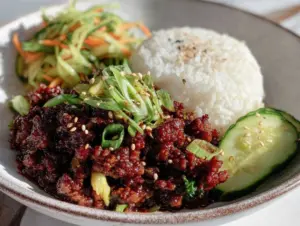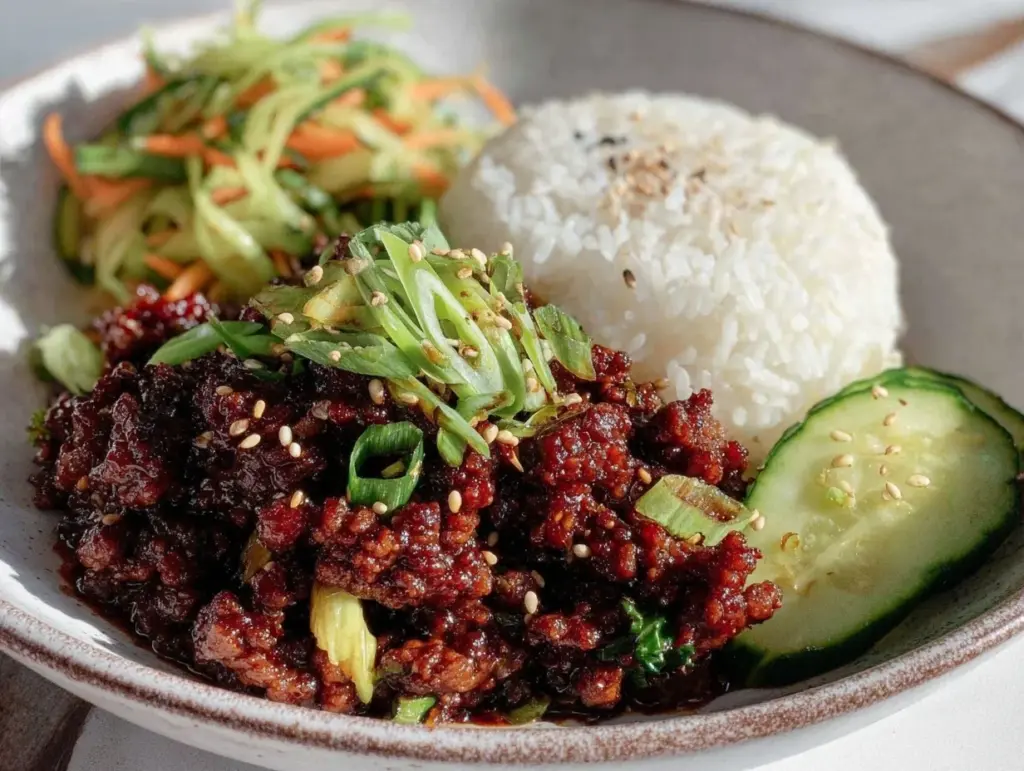
That sharp, spicy tang — the kind that sneaks up on you before you even realize what’s happening — still takes me straight to a small Korean market tucked away behind a busy street in my old neighborhood. The mingling scents of sizzling meat and fermented chili paste hung thick in the air, pulling me closer to a tiny stall where the vendor was carefully stirring a bubbling pot of gochujang sauce. I remember standing there, the hum of the city fading into a quiet buzz, watching as the ground beef simmered and soaked up those fiery flavors. It wasn’t just food; it was a feeling, the kind that wraps around you like a warm blanket on a chilly evening.
Years later, I found myself craving that exact feeling in my own kitchen, trying to capture the essence of those flavorful Korean ground beef bowls with gochujang sauce. Honestly, it took a few tries to get it just right — balancing the heat with a touch of sweetness, the savory depth with a hint of freshness. But once I nailed it, it became a staple, a little ritual I turn to when the week feels long and I want something comforting but with a bit of a kick. It’s not just the taste; it’s the way this recipe brings a quiet satisfaction, like a secret shared between the busy cook and the plate.
What sticks with me most is how this simple bowl, with its bold gochujang sauce and tender ground beef, can feel so special without any fuss. It’s a humble meal that somehow knows how to hit all those notes — spicy, sweet, savory, and totally crave-worthy — and that’s why it’s stayed in my rotation. This isn’t just another dinner; it’s a little moment of joy, waiting to happen.
Why You’ll Love This Recipe
After testing and tweaking this recipe countless times, I’m confident these flavorful Korean ground beef bowls with gochujang sauce will become a go-to for you, too. Here’s why:
- Quick & Easy: Ready in under 30 minutes, perfect for those hectic weeknights or when you need dinner on the table fast.
- Simple Ingredients: No need for fancy or hard-to-find items — the ingredients are pantry staples or easy to find at any grocery store.
- Perfect for Cozy Dinners: Whether you’re cooking for yourself or feeding the family, this meal hits the spot with no stress.
- Crowd-Pleaser: The balance of sweet, spicy, and savory flavors impresses everyone, even picky eaters.
- Unbelievably Delicious: The gochujang sauce adds a depth of flavor that’s rich and complex but still approachable.
This isn’t just another ground beef recipe — the secret lies in the way the gochujang sauce is blended with a few extra ingredients to create that perfect harmony of heat and sweetness. Also, I like to brown the beef just right, so it’s tender but with a hint of caramelization that makes every bite pop. It’s the kind of dinner you savor slowly, eyes closed, letting the flavors settle in.
Plus, the recipe is pretty adaptable, so you can tweak it for spice level or swap ingredients to suit your preferences. Honestly, this bowl feels like a little celebration of simple, bold Korean-inspired flavors you don’t find enough in weeknight meals. If you’ve enjoyed meals like the crispy garlic chicken or want to try something with a punch of flavor but minimal effort, this recipe is your new best friend.
What Ingredients You Will Need
This recipe uses simple, wholesome ingredients to deliver bold flavor and satisfying texture without the fuss. Most are pantry staples, and the gochujang sauce brings the authentic Korean touch that makes the dish stand out.
- Ground Beef (1 lb / 450 g): I recommend 80/20 lean-to-fat ratio for the best texture and flavor, but leaner beef works if you prefer.
- Gochujang (2 tbsp): This Korean chili paste is the star — look for a reputable brand like Chung Jung One or Mother-in-Law’s for authentic taste.
- Soy Sauce (3 tbsp): Use low-sodium if you want to control saltiness.
- Brown Sugar (1 tbsp): Balances the heat with a subtle sweetness.
- Garlic (3 cloves, minced): Adds warmth and depth.
- Ginger (1 tsp, grated): Fresh ginger brightens the sauce.
- Sesame Oil (1 tsp): For that toasty, nutty flavor that’s classic in Korean cooking.
- Rice Vinegar (1 tsp): Adds a mild tang to cut through richness.
- Green Onions (2, sliced): For garnish and a fresh crunch.
- Cooked Rice (3 cups / 600 g): I prefer jasmine or short-grain rice for its fluffy texture.
- Optional Toppings: Toasted sesame seeds, steamed or pickled vegetables, or a fried egg on top for extra comfort.
You can swap ground turkey or chicken for beef if you want a lighter version, or try using coconut sugar in place of brown sugar for a different sweetness profile. Also, if you don’t have rice vinegar handy, a splash of apple cider vinegar works in a pinch.
Equipment Needed
- Large skillet or frying pan: For browning the ground beef evenly. I’ve had great results with a heavy-bottomed non-stick pan, but cast iron works beautifully, too.
- Measuring spoons and cups: Essential for balancing the sauce flavors precisely.
- Wooden spoon or spatula: For stirring the beef and sauce without scratching your cookware.
- Rice cooker or pot: To cook the rice perfectly fluffy — I personally swear by my rice cooker, but stovetop works fine with a bit more attention.
- Grater or microplane: To grate fresh ginger quickly and finely.
If you don’t have a microplane, just finely mince the ginger—it’ll add the same brightness, just with a different texture. And if you’re on a budget, any basic non-stick skillet will do just fine. Just make sure to keep the heat moderate to get that nice caramelization without burning.
Preparation Method
- Cook the Rice (20 minutes): Start by rinsing 3 cups (600 g) of jasmine or short-grain rice under cold water until the water runs clear. Cook according to your rice cooker’s instructions or on the stovetop with 4 cups (960 ml) of water, bringing to a boil, then simmering covered for 15-18 minutes. Let it rest off heat for 5 minutes before fluffing with a fork.
- Prepare the Sauce (5 minutes): In a small bowl, whisk together 2 tbsp gochujang, 3 tbsp soy sauce, 1 tbsp brown sugar, 1 tsp sesame oil, 1 tsp rice vinegar, 3 minced garlic cloves, and 1 tsp freshly grated ginger. Taste and adjust sweetness or heat if needed. The sauce should be balanced — neither too salty nor overpoweringly spicy.
- Brown the Ground Beef (10 minutes): Heat a large skillet over medium heat. Add the ground beef and cook, breaking it apart with a wooden spoon. Cook until browned and no longer pink, about 6-8 minutes. Drain excess fat if needed, but leaving a little helps keep it moist.
- Mix in the Sauce (3 minutes): Pour the prepared gochujang sauce over the beef. Stir well to coat all the meat, and let it simmer for 2-3 minutes until the sauce thickens slightly and clings to the beef.
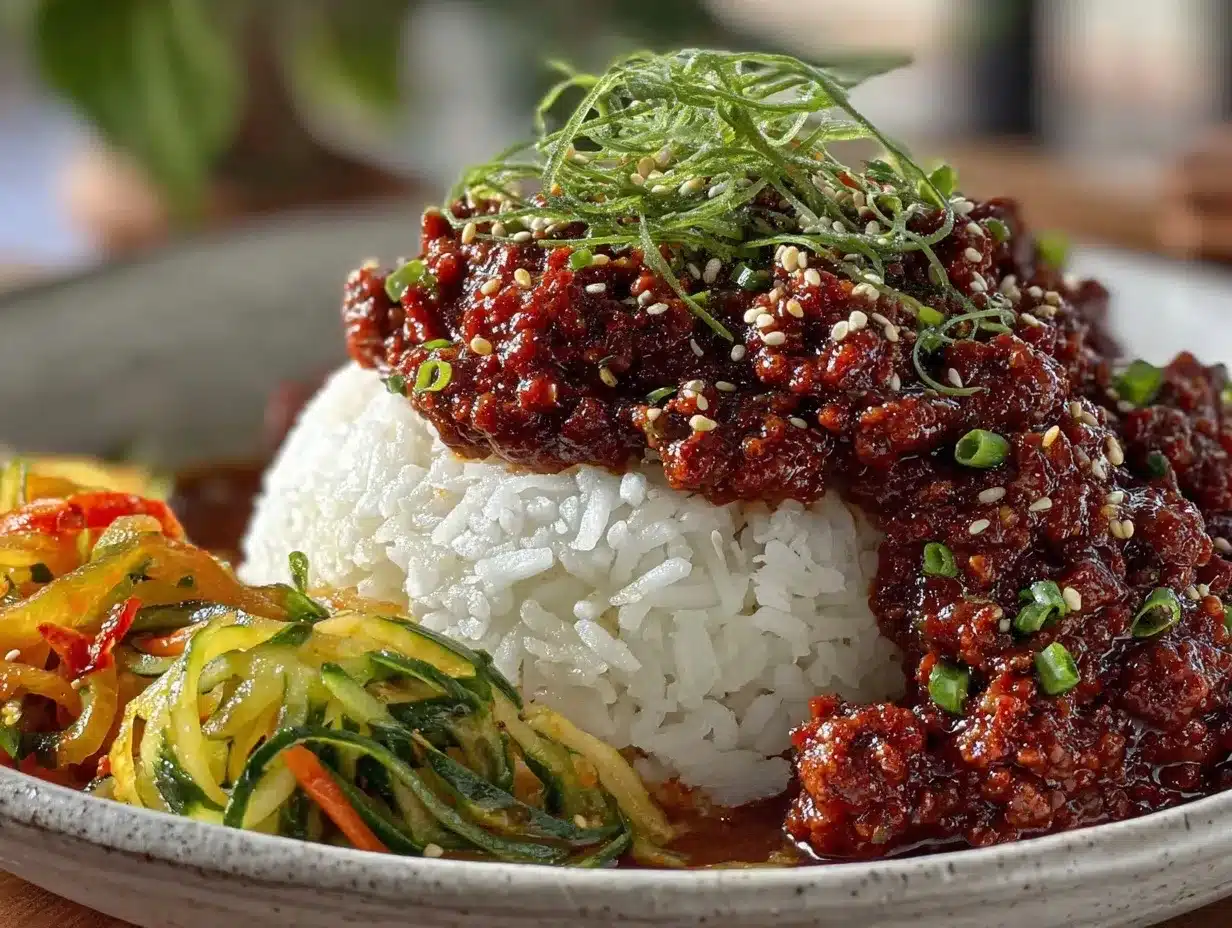
- Assemble the Bowls (2 minutes): Spoon cooked rice into bowls, top generously with the Korean ground beef mixture, and garnish with sliced green onions and toasted sesame seeds. Add optional toppings like steamed veggies or a fried egg if you like.
Preparation notes: Try not to rush the browning step — that caramelized crust on the beef adds so much flavor. Also, if your sauce feels too thick, splash in a little water or broth to loosen it. When stirring in the sauce, keep the heat moderate to avoid burning the sugars in the gochujang.
Cooking Tips & Techniques
One of the trickiest parts of this recipe is balancing the bold flavors of the gochujang sauce without overpowering the dish. Here’s what I’ve learned after plenty of kitchen experiments:
- Brown the beef well: Don’t overcrowd the pan, or it will steam instead of brown. Browning gives a deeper, more complex flavor that’s worth the extra minute or two.
- Adjust the heat level: Gochujang can vary in spiciness depending on the brand. Start with a smaller amount if you’re sensitive to heat, then add more gradually.
- Don’t skip the sugar: The brown sugar tames the chili paste’s sharpness and rounds out the sauce beautifully.
- Fresh ginger matters: Fresh grated ginger adds brightness and a subtle zing that dried ginger just can’t match.
- Multitasking tip: While the rice cooks, prep your sauce and brown the beef. This keeps everything moving efficiently, so dinner comes together quickly.
I once tried skipping the rice vinegar, thinking it wasn’t necessary, and the sauce felt flat. Adding that small amount of acidity really wakes up the flavors. Also, I recommend tasting the sauce before mixing it with the beef to tweak seasoning — it’s easier to fix early than later!
Variations & Adaptations
This recipe is pretty flexible, allowing you to make it your own based on taste or dietary needs:
- Vegetarian/Vegan: Swap ground beef for crumbled tempeh or cooked lentils. Use tamari instead of soy sauce for gluten-free and add a splash of maple syrup instead of brown sugar.
- Low-Carb: Serve the beef mixture over cauliflower rice or sautéed zucchini noodles for a lighter, low-carb option.
- Spicy Level: For extra heat, add a pinch of red pepper flakes or drizzle with extra gochujang sauce. If you prefer mild, use less gochujang and add a touch of honey for sweetness.
- Seasonal Toppings: Try adding quick-pickled cucumbers or kimchi for authentic Korean flair and crunch.
- Cooking Method: If you don’t want to use the stove, you can cook the ground beef in an air fryer basket at 375°F (190°C) for 10-12 minutes, stirring halfway through, then toss with the sauce.
One time, I added a fried egg on top, and it transformed the bowl into something indulgently satisfying — the runny yolk mixing with the spicy beef was pure comfort. If you like a fusion twist, pairing this bowl with some steamed dumplings from a previous favorite like the crispy garlic herb pull-apart bread makes for a fun contrast in textures and flavors.
Serving & Storage Suggestions
Serve these Korean ground beef bowls hot, right after assembling to enjoy the full flavor. Garnish with fresh green onions and toasted sesame seeds for that final, inviting touch.
They pair beautifully with simple sides like steamed broccoli, snap peas, or a crisp cucumber salad to balance the richness. And if you want a refreshing drink to go alongside, a cold glass of iced green tea or a homemade strawberry acai refresher complements the spicy kick.
For leftovers, store the beef and rice separately in airtight containers in the fridge for up to 3 days. Reheat gently in a skillet or microwave until warmed through. If the sauce thickens too much, stir in a little water to loosen it.
These bowls can also be frozen, though the texture of the rice changes slightly. Freeze in portions and thaw overnight in the fridge before reheating. Flavors often deepen after sitting for a day, so leftovers sometimes taste even better!
Nutritional Information & Benefits
Each serving of these flavorful Korean ground beef bowls provides a satisfying balance of protein, carbs, and healthy fats. Ground beef offers a good source of iron and B vitamins, while the gochujang sauce contains fermented chili paste, which may support gut health.
Using a moderate amount of sesame oil adds heart-healthy fats, and the inclusion of garlic and ginger brings antioxidants and anti-inflammatory benefits. For those watching carbs, swapping rice for cauliflower rice lowers carbohydrate content without sacrificing flavor.
This recipe is naturally gluten-free when using tamari instead of soy sauce and is free from common allergens except for soy. It’s a wholesome option that feels indulgent but fits well within a balanced diet.
Conclusion
These flavorful Korean ground beef bowls with gochujang sauce have quietly earned a special place in my kitchen and heart. They’re a perfect marriage of simple ingredients and bold flavors that come together quickly but leave a lasting impression. Whether you’re feeding a hungry family or just craving something spicy and satisfying, this recipe is easy to customize and hard to forget.
Cooking this meal always reminds me how a few pantry staples and a little care can create something memorable. I hope it becomes a comforting favorite for you, too. If you give it a try, I’d love to hear how you make it your own — feel free to share your tweaks or topping ideas. Here’s to many cozy, flavorful dinners ahead!
FAQs
- Can I make this recipe gluten-free?
Yes! Use tamari or a gluten-free soy sauce alternative instead of regular soy sauce to keep it gluten-free. - How spicy is gochujang sauce?
Gochujang has a mild to medium heat level, with a sweet and savory flavor. You can adjust the amount used to suit your spice tolerance. - What can I use instead of ground beef?
Ground turkey, chicken, tempeh, or cooked lentils are great substitutes depending on dietary preferences. - Can I prepare this recipe ahead of time?
Yes, you can make the beef mixture in advance and store it separately from the rice. Reheat both before serving. - What toppings go well with these bowls?
Try sliced green onions, sesame seeds, fried eggs, steamed or pickled vegetables, or kimchi for added flavor and texture.
Pin This Recipe!
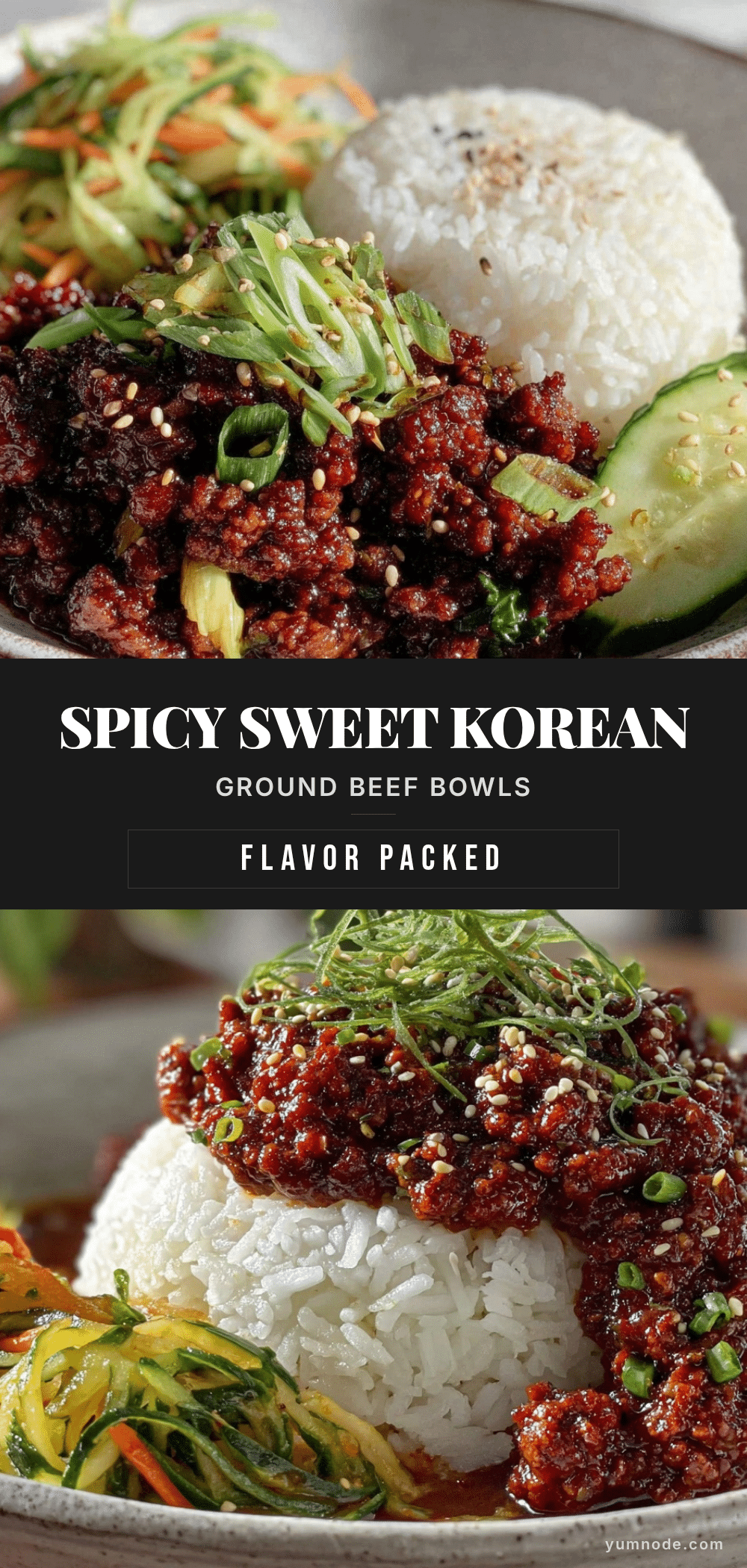
Flavorful Korean Ground Beef Bowls Easy Gochujang Sauce Recipe for Dinner

A quick and easy Korean-inspired ground beef bowl with a bold, balanced gochujang sauce that is spicy, sweet, and savory. Perfect for cozy weeknight dinners and adaptable to various dietary preferences.
- Prep Time: 10 minutes
- Cook Time: 20 minutes
- Total Time: 30 minutes
- Yield: 4 servings 1x
- Category: Main Course
- Cuisine: Korean
Ingredients
- 1 lb ground beef (80/20 lean-to-fat ratio recommended)
- 2 tbsp gochujang (Korean chili paste)
- 3 tbsp soy sauce (low-sodium recommended)
- 1 tbsp brown sugar
- 3 cloves garlic, minced
- 1 tsp fresh ginger, grated
- 1 tsp sesame oil
- 1 tsp rice vinegar
- 2 green onions, sliced
- 3 cups cooked jasmine or short-grain rice
- Optional toppings: toasted sesame seeds, steamed or pickled vegetables, fried egg
Instructions
- Cook the rice: Rinse 3 cups of jasmine or short-grain rice under cold water until water runs clear. Cook in a rice cooker or on stovetop with 4 cups water, bring to boil, then simmer covered for 15-18 minutes. Let rest off heat for 5 minutes and fluff with a fork.
- Prepare the sauce: In a small bowl, whisk together 2 tbsp gochujang, 3 tbsp soy sauce, 1 tbsp brown sugar, 1 tsp sesame oil, 1 tsp rice vinegar, 3 minced garlic cloves, and 1 tsp grated ginger. Adjust sweetness or heat as needed.
- Brown the ground beef: Heat a large skillet over medium heat. Add ground beef and cook, breaking apart with a wooden spoon, until browned and no longer pink, about 6-8 minutes. Drain excess fat if desired, leaving a little for moisture.
- Mix in the sauce: Pour the prepared gochujang sauce over the beef. Stir well to coat all meat and simmer for 2-3 minutes until sauce thickens slightly.
- Assemble the bowls: Spoon cooked rice into bowls, top with the Korean ground beef mixture, garnish with sliced green onions and toasted sesame seeds. Add optional toppings like steamed veggies or a fried egg.
Notes
Do not overcrowd the pan when browning beef to ensure proper caramelization. Adjust gochujang amount to control spice level. If sauce is too thick, add a splash of water or broth. Fresh grated ginger adds brightness. Sauce can be made ahead and stored separately from rice. For gluten-free, use tamari instead of soy sauce.
Nutrition
- Serving Size: 1 bowl (approximatel
- Calories: 480
- Sugar: 8
- Sodium: 700
- Fat: 22
- Saturated Fat: 8
- Carbohydrates: 45
- Fiber: 2
- Protein: 28
Keywords: Korean ground beef bowls, gochujang sauce, easy Korean dinner, spicy beef bowl, quick weeknight meal, Korean recipe, ground beef recipe