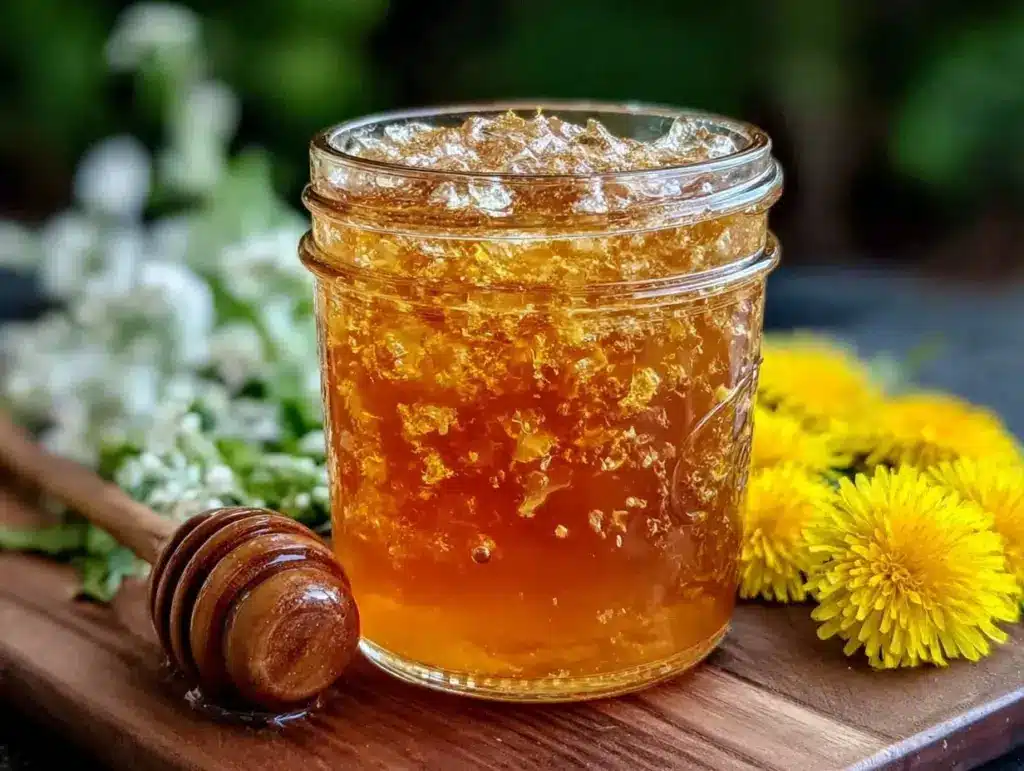
The first time I stumbled upon making homemade dandelion jelly, it was a bit of a happy accident. I was wandering through a local park on a cloudy afternoon, hands full of foraged dandelion petals—bright, golden, and surprisingly fragrant. Honestly, I wasn’t sure what I was going to do with all those flowers. At first, I thought about tossing them into tea or maybe a salad, but the idea of turning them into a sweet floral spread sounded both charming and a little wild.
After chatting with a neighbor who swore by foraging season treats, I decided to give it a shot, skeptical but curious. The kitchen soon filled with a gentle aroma reminiscent of spring mornings, and as the jelly set, I realized this wasn’t just a quirky experiment. It was a genuinely delightful treat that tastes like sunshine captured in a jar.
Since then, dandelion jelly has become my little secret for gifting and cozy breakfasts, a jar that always sparks questions and smiles. It’s a reminder that sometimes the best things come from the simplest, most overlooked ingredients. There’s something quietly satisfying about spreading that sweet, floral jelly on toast and knowing you made it yourself, from petals foraged just steps outside your door.
This recipe stuck with me not because it’s fancy but because it’s honest, easy, and unexpectedly delicious—a little jar of nature’s sweetness that invites you to slow down and savor the moment.
Why You’ll Love This Recipe
If you’re wondering why homemade dandelion jelly deserves a spot in your pantry, let me share what makes this recipe stand out from the crowd. After testing and tweaking, I can say this spread is more than just a novelty:
- Quick & Easy: You’ll have your jelly ready in about 45 minutes, perfect for sneaking in a creative kitchen project even on busy days.
- Simple Ingredients: No need to hunt for exotic components—just dandelion petals, sugar, lemon juice, and pectin. All pantry-friendly and straightforward.
- Perfect for Gifting & Breakfast: This sweet floral spread shines on toast, biscuits, or even drizzled over yogurt. It’s a charming addition to brunch or a thoughtful homemade gift.
- Crowd-Pleaser: I’ve shared this jelly with friends and family, and it always sparks curiosity—especially from those who usually shy away from “weird” jams.
- Unbelievably Delicious: The subtle floral notes balance perfectly with just the right amount of sweetness, creating a jelly that feels fresh and light but deeply comforting.
What makes this recipe different? The secret lies in gently simmering the petals to coax out their natural essence without bitterness, paired with fresh lemon juice that brightens the whole thing up. Plus, I use a trusted brand of fruit pectin that guarantees a firm set without overcooking the jelly, preserving that delicate flavor.
Whether you’re a seasoned forager or just someone looking for a new homemade jam to impress guests without stress, this dandelion jelly fits the bill. It’s the kind of treat that invites you to slow down, savor each bite, and maybe even get a little playful with your breakfast routine.
What Ingredients You Will Need
This recipe uses simple, wholesome ingredients to deliver bold flavor and a satisfying texture without fuss. Most are pantry staples, and the dandelion petals are the seasonal star you can gather yourself or find at a trusted local source.
- Dandelion Petals – about 4 cups, loosely packed (fresh, bright yellow petals only; avoid green parts to prevent bitterness)
- Water – 4 cups (to steep the petals and extract flavor)
- Lemon Juice – 1/4 cup fresh-squeezed (adds brightness and natural pectin)
- Granulated Sugar – 4 cups (regular white sugar works best for clear, bright jelly)
- Fruit Pectin – 1 box (about 1.75 oz or 50 grams; I prefer Sure-Jell for consistent results)
Optional but recommended:
- Butter – 1 tablespoon (added at the end to reduce foaming during cooking)
Tips on ingredients:
- Dandelion Petals: Pick petals on a dry day, ideally mid-morning after the dew has dried. Avoid areas treated with pesticides or heavy traffic.
- Fruit Pectin: Using a trusted brand like Sure-Jell or Ball is key to achieving a perfect gel without extra fuss.
- Sugar: For a lower-sugar version, you can reduce sugar slightly but expect a looser set and a less bright flavor.
- Lemon Juice: Fresh is best here—bottled juice can sometimes dull the flavor and affect the set.
Substitution guidance:
- Use organic cane sugar for a more natural sweetness.
- For a vegan option, ensure your pectin is plant-based (most are) and skip the butter or use a vegan alternative to reduce foam.
Equipment Needed
- Large Pot: A heavy-bottomed pot around 5-quart size works well to prevent scorching during simmering.
- Fine Mesh Strainer or Cheesecloth: For straining the dandelion petals to get clear juice without bits.
- Measuring Cups and Spoons: Precision matters for sugar and pectin.
- Wooden Spoon or Heatproof Spatula: For stirring the jelly mixture gently but thoroughly.
- Jam Jars or Heatproof Containers: For storing your finished jelly. Mason jars with lids are perfect.
- Jar Funnel (optional): Makes filling jars less messy.
- Thermometer (optional): Useful if you want to check the jelly’s setting temperature (220°F / 104°C is the usual target).
Budget-friendly alternatives:
- Use a colander lined with clean cheesecloth if you don’t have a fine mesh strainer.
- Regular glass jars with screw lids can replace specialized jam jars.
Personal experience: I once used an old soup pot and a kitchen towel to strain petals when I was out of cheesecloth. It worked fine but took patience to squeeze the juice out without pulp in the jelly.
Preparation Method
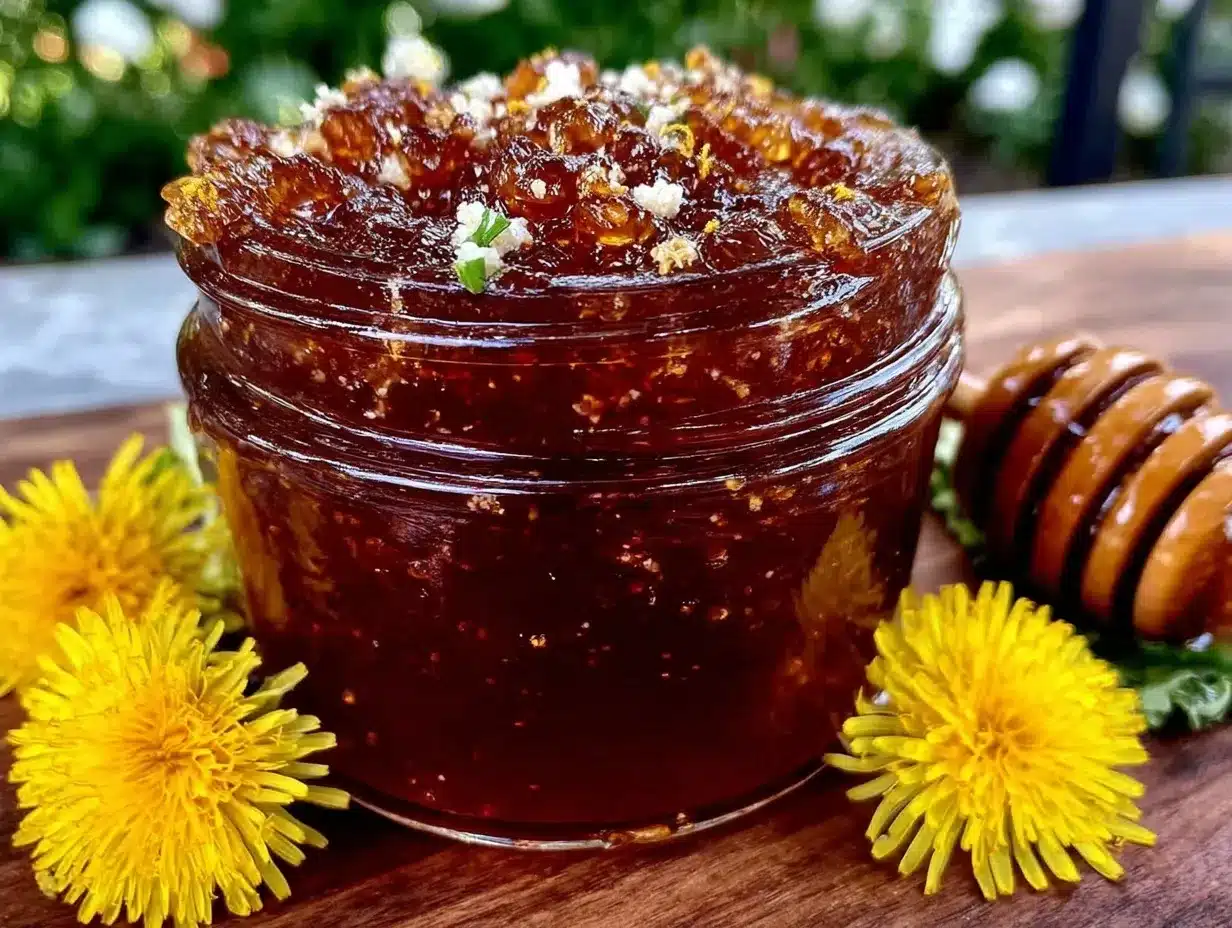
- Harvest and Prep Petals: Pick about 4 cups of fresh dandelion petals, making sure to only take the yellow parts. Rinse gently in cool water to remove any dirt or small bugs. Pat dry with a towel. (Time: 10 minutes)
- Steep Petals: Place the petals in your large pot and add 4 cups of water. Bring to a simmer over medium heat, then reduce to low and let steep for 10 minutes until the water turns a rich golden color. Avoid boiling hard to keep flavors delicate.
- Strain the Petals: Pour the mixture through a fine mesh strainer or cheesecloth into a large bowl or pot. Press gently to extract as much liquid as possible without squeezing out bitter bits. Discard the spent petals.
- Measure Liquid: Measure out exactly 4 cups of the dandelion-infused liquid. If you’re short, add a bit of water to reach 4 cups.
- Mix with Pectin and Lemon Juice: Return the liquid to the pot. Stir in 1 box (about 1.75 oz / 50 g) of fruit pectin and the 1/4 cup fresh lemon juice. Mix well to combine before heating.
- Bring to a Boil: Heat the mixture over high heat, stirring constantly. Once it reaches a full rolling boil (one that doesn’t stop bubbling when stirred), add the 4 cups granulated sugar all at once. Stir quickly and thoroughly.
- Boil Again: Return to a full rolling boil and keep boiling for exactly 1 minute while stirring constantly. (This step sets the jelly properly.)
- Reduce Foam: Remove from heat and stir in 1 tablespoon of butter to reduce foaming and give a smooth finish.
- Jar the Jelly: Pour the hot jelly into sterilized jars, leaving about 1/4 inch headspace. Wipe rims clean and seal with lids.
- Cool and Store: Let jars cool at room temperature until set and firm, about 4 to 6 hours or overnight. Store in a cool, dark place or refrigerate once opened.
Troubleshooting tips:
- If jelly doesn’t set, it might be due to under-boiling or old pectin. Try reboiling with additional pectin if needed.
- Too bitter? Make sure to remove all green parts of the flower and don’t over-steep petals.
Personal tip: I like to keep a kitchen timer handy during boiling to avoid overcooking, which can dull the delicate floral notes.
Cooking Tips & Techniques
Making dandelion jelly can seem a little intimidating at first, but once you get the hang of a few techniques, it’s surprisingly straightforward.
- Picking Petals: Only harvest petals from pesticide-free areas on a dry day. Early morning dew can dilute flavors, so mid-morning is ideal.
- Extracting Flavor: Simmer petals gently instead of boiling hard to preserve the bright, sweet floral aroma without bitterness.
- Using Pectin: Stir fruit pectin into the cold liquid before heating. This helps it dissolve evenly and prevents clumps.
- Boiling Time: A full rolling boil is essential for activating the pectin and achieving a firm jelly. Set a timer for accuracy.
- Foam Control: Adding butter at the end cuts down on foam, which can otherwise make jar lids sticky or jelly look cloudy.
- Jar Sterilization: Don’t skip sterilizing your jars — hot, clean jars prevent spoilage and keep jelly fresh longer.
Lessons learned along the way: My first batch was a bit runny because I didn’t boil the sugar mixture long enough. Now, I always wait for that full rolling boil and count the minute carefully. Also, straining the petals well makes a huge difference in clarity and texture.
Multitasking strategy: While the jelly simmers, I usually prep my jars and clean up the kitchen. It keeps the process smooth, so you’re not scrambling once the jelly is ready.
Variations & Adaptations
Once you’ve nailed the classic dandelion jelly, there’s plenty of room to play around with flavors and adaptations:
- Herbal Twist: Add a few sprigs of fresh mint or lavender during the steeping stage for a layered floral-herbal flavor.
- Lower Sugar Version: Cut sugar by 25% and use a low-sugar pectin designed for jams. Expect a softer set and more tartness.
- Spiced Dandelion Jelly: Stir in ground ginger or cinnamon at the end of cooking for subtle warmth that pairs beautifully with the floral notes.
- Alternative Sweetener: Use organic cane sugar or coconut sugar for a richer color and deeper flavor. Avoid honey if you want a clear jelly.
- Vegan Friendly: Ensure pectin is plant-based (most are) and skip the butter or swap it with a vegan alternative to cut foam.
For different cooking methods, some folks use a slow cooker to steep the petals gently overnight, but I find the stovetop method faster and more controllable. Once, I tried a pressure cooker method — it was quick but lost some delicate aroma, so I stick with simmering now.
One personal favorite variation is stirring in a bit of fresh lemon zest after cooking for an extra zing that brightens each spoonful.
Serving & Storage Suggestions
Dandelion jelly is best enjoyed at room temperature, spread thick on crusty bread, warm toast, or fluffy biscuits. The floral sweetness pairs wonderfully with creamy butter or a smear of cream cheese for breakfast or a light snack.
Try it alongside a soft cheese plate or dolloped on vanilla yogurt for a subtle, nature-inspired twist. It also complements light teas and herbal infusions for a relaxing afternoon treat.
Storage tips:
- Store unopened jars in a cool, dark place for up to one year.
- Once opened, keep refrigerated and consume within 3 to 4 weeks for best flavor.
- You can freeze dandelion jelly in airtight containers for up to 6 months; thaw in the fridge overnight before use.
Reheating isn’t necessary, but if your jelly thickens too much in the fridge, a quick stir at room temperature or gentle warming in a bowl over hot water helps soften it.
Flavors deepen and mellow with time, so jars kept for a few weeks taste smoother and more balanced — patience really rewards you here.
Nutritional Information & Benefits
Homemade dandelion jelly is a sweet treat, but it comes with some surprising benefits thanks to its star ingredient. Here’s a rough estimate per tablespoon (20g):
| Calories | 50 |
|---|---|
| Carbohydrates | 13g (mostly sugars) |
| Fat | 0g |
| Protein | 0g |
| Fiber | 0g |
Dandelion petals contain antioxidants and vitamins like A and C, adding a subtle health boost to your sweet spread. The lemon juice provides vitamin C and acts as a natural preservative, while the fruit pectin supports digestion.
This recipe is gluten-free and can easily be vegan if you skip the butter or use a plant-based substitute. Just watch out for allergies to flowers or citrus if you’re serving it to guests for the first time.
From a wellness perspective, making your own jelly means controlling sugar content and avoiding preservatives, which feels good when you want a treat that’s both indulgent and honest.
Conclusion
Homemade dandelion jelly is one of those recipes that feels special, not because it’s complicated, but because it reconnects you with nature’s little gifts. Its sweet, floral flavor is a gentle reminder that sometimes the best ingredients are growing right underfoot.
Feel free to tweak the sweetness, experiment with herbs, or try the spiced variation to make it your own. Every jar tells a story of a quiet afternoon spent picking petals and the warmth of a kitchen filled with simple aromas.
For me, this jelly isn’t just a spread—it’s a celebration of spring and the joy of creating something unique from scratch. If you try it, I’d love to hear how your batch turns out or what twists you add to the recipe.
Keep savoring those homemade moments and happy foraging!
FAQs
Can I use dandelions from my lawn for this jelly?
Only if you’re sure they haven’t been treated with pesticides or herbicides. Always pick from clean, chemical-free areas to ensure safety.
How long does homemade dandelion jelly last?
Unopened and stored in a cool, dark place, it lasts up to one year. Once opened, keep it refrigerated and use within 3 to 4 weeks.
Can I freeze dandelion jelly?
Yes! Freeze in airtight containers for up to 6 months. Thaw in the fridge overnight before enjoying.
What can I substitute for fruit pectin?
You can try natural alternatives like chia seeds for a jam-like texture, but traditional pectin is best for that classic jelly set.
Is dandelion jelly suitable for vegans?
Absolutely! Just omit the butter or replace it with a vegan alternative to reduce foam during cooking.
By the way, if you enjoy making homemade spreads, you might also appreciate the cozy sweetness of cozy pumpkin spice bread with cream cheese swirl or the fresh zest of creamy key lime pie bars. Both bring a comforting homemade vibe to your kitchen that pairs beautifully with a jar of this floral jelly.
Pin This Recipe!
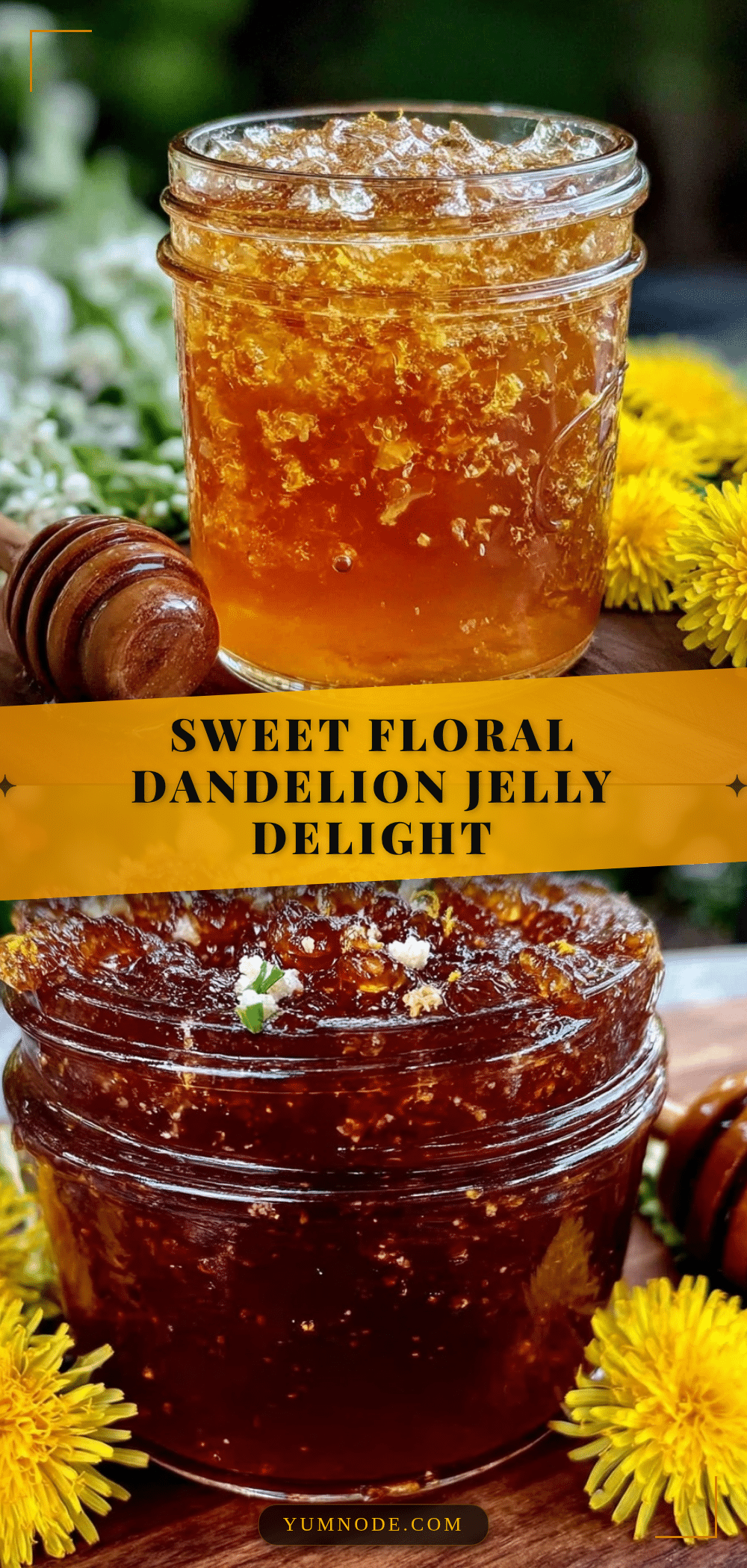
Homemade Dandelion Jelly

A sweet, floral jelly made from foraged dandelion petals, perfect for spreading on toast or gifting. This easy recipe captures the essence of spring in a jar with simple ingredients and a quick cooking process.
- Prep Time: 15 minutes
- Cook Time: 30 minutes
- Total Time: 45 minutes
- Yield: About 4 half-pint jars (approximately 8 servings) 1x
- Category: Spread
- Cuisine: American
Ingredients
- 4 cups fresh dandelion petals (yellow parts only, loosely packed)
- 4 cups water
- 1/4 cup fresh lemon juice
- 4 cups granulated sugar
- 1 box fruit pectin (about 1.75 oz or 50 grams, e.g. Sure-Jell)
- 1 tablespoon butter (optional, to reduce foaming)
Instructions
- Pick about 4 cups of fresh dandelion petals, rinse gently in cool water, and pat dry.
- Place petals in a large pot and add 4 cups of water. Simmer over medium heat, then reduce to low and steep for 10 minutes until water turns golden.
- Strain the mixture through a fine mesh strainer or cheesecloth into a bowl, pressing gently to extract liquid. Discard petals.
- Measure exactly 4 cups of the dandelion-infused liquid, adding water if needed.
- Return liquid to the pot. Stir in fruit pectin and fresh lemon juice until well combined.
- Heat over high heat, stirring constantly until a full rolling boil is reached.
- Add granulated sugar all at once, stirring quickly and thoroughly.
- Return to a full rolling boil and boil for exactly 1 minute while stirring constantly.
- Remove from heat and stir in butter to reduce foam.
- Pour hot jelly into sterilized jars, leaving 1/4 inch headspace. Wipe rims clean and seal with lids.
- Let jars cool at room temperature until set, about 4 to 6 hours or overnight. Store in a cool, dark place or refrigerate after opening.
Notes
[‘Pick petals on a dry day from pesticide-free areas.’, ‘Avoid green parts of the flower to prevent bitterness.’, ‘Use fresh lemon juice for best flavor and set.’, ‘A full rolling boil is essential for proper jelly setting.’, ‘Add butter at the end to reduce foaming.’, ‘Sterilize jars to prevent spoilage.’, ‘If jelly doesn’t set, reboil with additional pectin.’, ‘For vegan jelly, omit butter or use a vegan substitute.’, ‘Lower sugar versions will have a softer set and less bright flavor.’, ‘Try adding fresh mint, lavender, or spices like ginger or cinnamon for variations.’]
Nutrition
- Serving Size: 1 tablespoon (20g)
- Calories: 50
- Sugar: 13
- Carbohydrates: 13
Keywords: dandelion jelly, homemade jelly, floral spread, foraged jelly, sweet jelly, easy jelly recipe, spring recipe, natural jelly