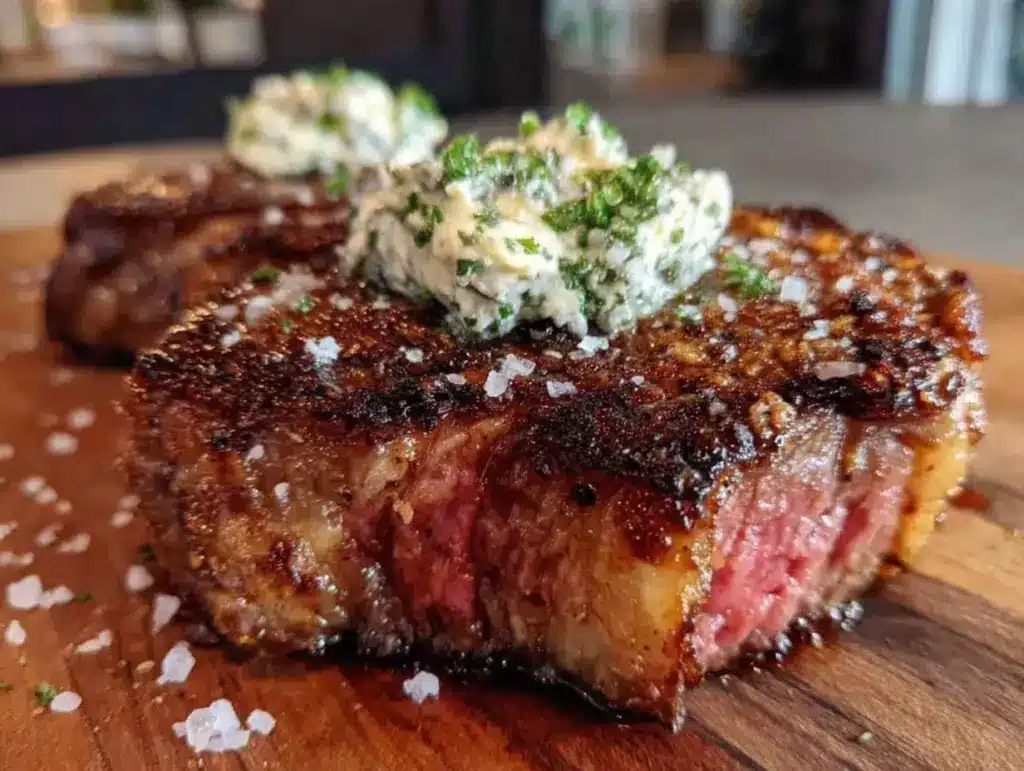
“Hey, you’re going to want to try this,” my friend said over the phone, voice low with that kind of excitement that only a true carnivore can pull off. We’d been talking about steaks, naturally. I was skeptical—dry aging? Reverse sear? Herb butter? It sounded fancy, almost intimidating. But with a busy week behind me and a craving that wouldn’t quit, I figured, why not give this Perfect Dry Aged Style Reverse Sear Ribeye with Herb Butter a shot?
That evening, the kitchen filled with the smell of sizzling beef and fresh herbs, and honestly, it felt like a little celebration in my own home. The crust on the ribeye? Spot on—crisp, caramelized, and just a touch smoky. The herb butter? Melting over the steak’s surface, adding this rich, aromatic finish that made me close my eyes and nod slowly. Not bad for something I almost passed over as too complicated.
It turned out that mastering this reverse sear technique was less about luck and more about patience and timing. I kept thinking about how this recipe could turn a casual weeknight into an occasion, without the stress of a big grill or fancy tools. It’s become my go-to when I want that dry-aged steakhouse vibe, minus the wait and the hefty price tag. Now, whenever I fire up this ribeye, I’m reminded that sometimes the best meals come from taking a moment to do things a little differently—and the herb butter? That’s just the kind of finishing touch that makes you feel like a pro, even on a hectic day.
The Perfect Dry Aged Style Reverse Sear Ribeye with Herb Butter isn’t just a recipe; it’s a little quiet triumph in the kitchen, and I’m glad it found its way to my plate.
Why You’ll Love This Recipe
Honestly, I’ve tried a few reverse sear methods before, but this one nails it with consistency and flavor every single time. Here’s why this ribeye recipe stands out:
- Quick & Easy: The entire process, from oven to pan, takes about 45 minutes, making it perfect for a special weeknight dinner without dragging on forever.
- Simple Ingredients: No need for fancy marinades or hard-to-find spices. Just good quality ribeye, salt, pepper, and fresh herbs for the butter.
- Perfect for Impressing Guests: Whether it’s a date night or a small dinner party, this steak comes off looking like it’s from a steakhouse.
- Crowd-Pleaser: I’ve served this alongside a creamy scalloped potatoes dish and had everyone asking for seconds (more on that in the cooking tips!).
- Unbelievably Delicious: The reverse sear locks in juices while giving you a crust that’s perfectly caramelized—paired with herb butter, it’s comfort food with a gourmet twist.
What really sets this apart is the way you get that rich, dry aged flavor without waiting weeks in a special fridge. The trick is slow-roasting the steak to the perfect internal temperature and then finishing with a sear that gives you that irresistible crust. The herb butter, with garlic, rosemary, and thyme, adds a fresh, buttery kick that keeps this recipe from feeling heavy or one-note. It’s the kind of meal that makes you pause and actually savor every bite, whether you’re an experienced cook or just figuring out your way around the kitchen.
What Ingredients You Will Need
This recipe uses straightforward, quality ingredients that come together to create bold flavor and satisfying texture without any fuss. Most are pantry staples, and the fresh herbs give it that unmistakable steakhouse touch.
- Ribeye Steak: 1 (1.5 to 2-inch thick, about 16 ounces/450 grams) ribeye, well-marbled for juicy results (don’t skip on a quality cut; I recommend USDA Choice or better)
- Salt: Kosher salt or sea salt, generously for seasoning
- Black Pepper: Freshly cracked, to taste
- Unsalted Butter: 4 tablespoons (about 60 grams), softened (I usually go with Kerrygold for rich flavor)
- Fresh Garlic: 2 cloves, minced (adds punch to the herb butter)
- Fresh Rosemary: 1 teaspoon, finely chopped
- Fresh Thyme: 1 teaspoon, finely chopped
- Olive Oil: 1 tablespoon, for searing (extra virgin for best flavor)
If you want to experiment, you can swap the fresh herbs with dried ones but fresh really makes the herb butter sing. Also, for a dairy-free option, try using a plant-based butter alternative and coconut oil for searing.
Equipment Needed
- Oven-safe wire rack and baking sheet: This helps air circulate around the steak during the slow roast, giving you even cooking. If you don’t have a wire rack, a broiler pan works as a substitute.
- Cast iron skillet or heavy-bottomed pan: For that perfect sear. I’ve tried stainless steel, but cast iron gives the best crust.
- Instant-read meat thermometer: Absolutely essential. It’s the difference between a perfectly cooked steak and a guesswork gamble.
- Small mixing bowl and spoon: For combining the herb butter ingredients.
- Tongs: For flipping the steak without piercing the meat (which keeps the juices inside).
Most of these tools are pretty common in any kitchen, but if you don’t have a thermometer, it’s worth investing in a budget-friendly one—you’ll use it for all your cooking adventures! I personally like the ThermoPro series for accuracy and price.
Preparation Method
- Preheat your oven to 250°F (120°C). This low temperature is key to cooking the steak evenly without overcooking the edges.
- Season the ribeye generously on all sides with kosher salt and freshly cracked black pepper. Trust me, don’t be shy here—that crust won’t form without enough seasoning.
- Place the steak on a wire rack set over a baking sheet. This setup lets air circulate around the meat, cooking it evenly. Insert your instant-read thermometer probe into the thickest part of the steak, making sure it doesn’t touch any bone or fat.
- Slow roast the steak in the oven until it reaches an internal temperature of 120°F (49°C) for medium-rare. This usually takes about 30-40 minutes but start checking at 25 minutes to avoid overshooting.
- While the steak roasts, prepare the herb butter: In a small bowl, mix softened butter with minced garlic, chopped rosemary, and thyme. Stir until combined and set aside at room temperature.
- Heat a cast iron skillet over high heat until it’s smoking hot. Add olive oil and swirl to coat.
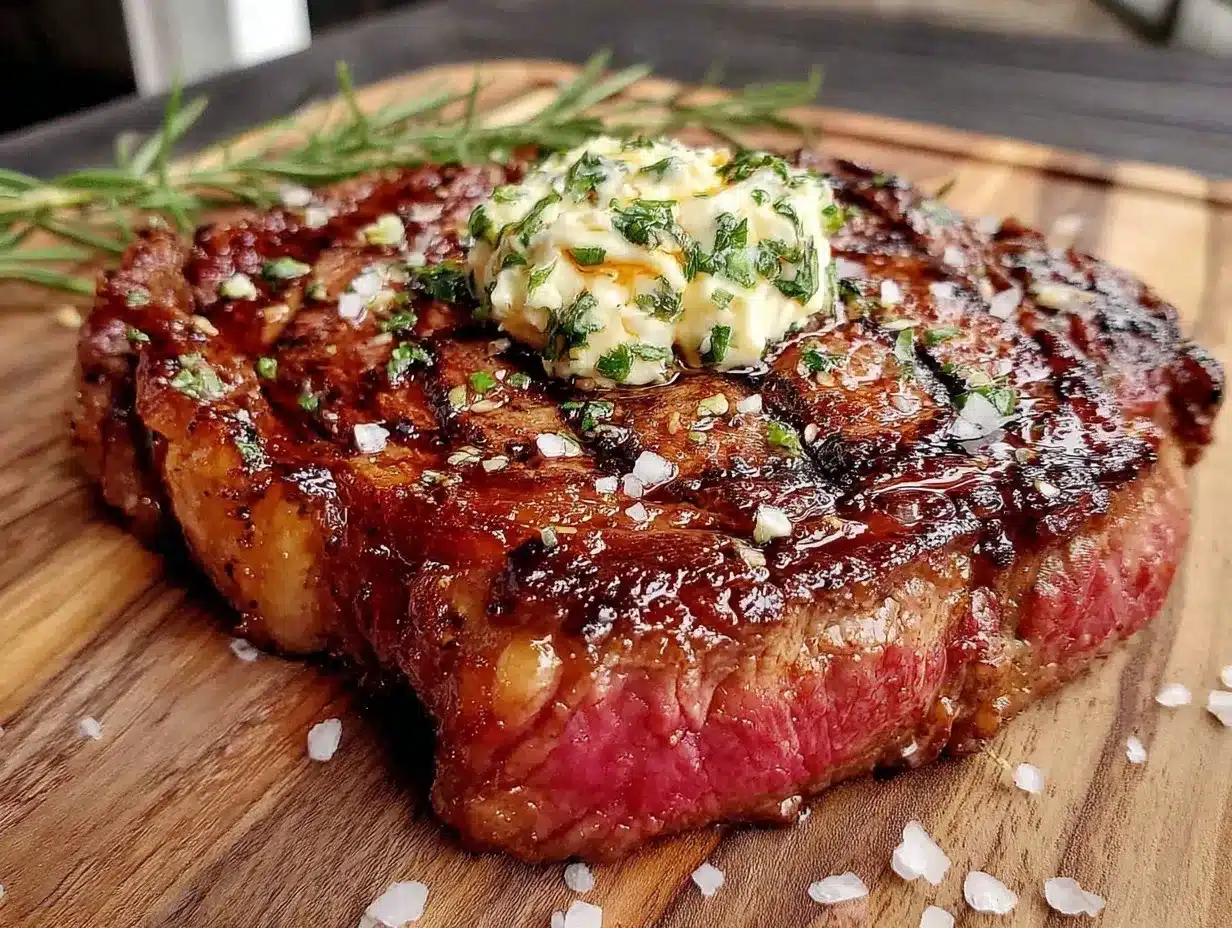
- Sear the ribeye for 1-2 minutes per side, including the edges. You want a dark brown, almost crusty exterior—this seals in those juices and develops flavor.
- Remove the steak from the pan and let it rest for about 5-7 minutes. Resting lets the juices redistribute, so when you cut in, it’s juicy and tender.
- Top the steak with a generous dollop of the herb butter while it’s still warm. Watch it melt and soak into every crevice—honestly, that moment is what makes this recipe unforgettable.
One tip I’ve learned: don’t skip the resting step. I tried cutting into it right away once, and the juices ran out like a waterfall. Waiting, even if it’s tough, makes all the difference.
Cooking Tips & Techniques
Getting that perfect crust and juicy interior can be tricky, but here’s what I’ve picked up along the way:
- Pat your steak dry before seasoning. Moisture is the enemy of a good sear, so a dry surface helps the crust form faster and more evenly.
- Don’t rush the reverse sear. The slow oven roast is the secret to even cooking—skip it and you’ll end up with a steak that’s overcooked on the edges and underdone in the middle.
- Use a thermometer. It’s the only way you’ll get consistent results. I usually pull the steak out at 120°F (49°C) aiming for medium-rare because it will carry over cook while searing.
- Keep your pan hot. The skillet needs to be smoking before the steak hits it. If it’s not hot enough, you’ll get more of a boiled effect than a seared crust.
- Don’t overcrowd the pan. If you’re cooking more than one steak, do it in batches to keep that searing temperature high.
- Rest your steak. I can’t stress this enough—resting gives a juicy, tender bite instead of a dry, tough one.
I once attempted this recipe with a thinner cut and skipped the slow roast phase; it turned out uneven and disappointing. After that, I stuck religiously to the method, and now it’s a reliable hit every time. Pairing this steak with some creamy scalloped potatoes from my creamy scalloped potatoes recipe really makes the meal complete.
Variations & Adaptations
This ribeye recipe is versatile, so feel free to tweak it based on your preferences or what you have on hand:
- Garlic-Parmesan Herb Butter: Add 2 tablespoons of grated Parmesan cheese to the herb butter for a savory, nutty twist.
- Spicy Kick: Mix a pinch of smoked paprika or cayenne pepper into your seasoning or herb butter for a subtle heat that wakes up the palate.
- Butter-Free Option: Swap the herb butter for a drizzle of high-quality extra virgin olive oil infused with garlic and herbs if you want a lighter finish.
- Alternative Cooking Methods: If you don’t have an oven-safe wire rack, try using a broiler pan or even sous vide the ribeye first for precise temperature before searing.
- Herb Variations: Use sage, tarragon, or oregano in place of rosemary and thyme for a different herb profile.
One time, I subbed in smoked sea salt instead of kosher salt, and that smoky edge paired beautifully with the herb butter. Experimenting with different herbs and finishing salts has become my fun little ritual with this recipe.
Serving & Storage Suggestions
This steak is best served hot and fresh, right after adding the herb butter so it melts luxuriously over the meat. Serve it sliced against the grain to maximize tenderness.
For sides, a fresh spinach salad with a poppyseed dressing or roasted asparagus works wonderfully to balance the richness. If you want a classic pairing, roasted garlic mashed potatoes or even some crispy baked parmesan chicken tenders from my crispy baked parmesan chicken tenders recipe complement the meal beautifully.
Leftovers keep well in the fridge for up to 3 days if wrapped tightly. Reheat gently in a low oven or a covered skillet to maintain juiciness. Avoid microwaving, which tends to dry the steak out. Flavors actually deepen overnight, so next-day sandwiches with a smear of horseradish mayo are a game changer.
Nutritional Information & Benefits
A 16-ounce ribeye steak packs approximately 1100 calories, with about 90 grams of protein and 80 grams of fat (mostly saturated and monounsaturated). The herb butter adds richness but also provides beneficial antioxidants from fresh garlic and herbs.
While it’s definitely a rich cut, ribeye offers essential nutrients like iron, zinc, and B vitamins. For those watching carbs, this recipe is naturally low-carb and gluten-free.
Choosing grass-fed or well-marbled beef can add omega-3 fatty acids and conjugated linoleic acid (CLA), which some studies suggest may have health benefits. Just keep portion sizes in mind and balance with plenty of veggies and fiber-rich sides.
Conclusion
This Perfect Dry Aged Style Reverse Sear Ribeye with Herb Butter recipe quickly earned a spot in my regular rotation because it proves that restaurant-quality steak can be made at home without complicated steps or exotic ingredients. The slow roast builds juicy tenderness, and the final sear creates that crave-worthy crust you want on every bite.
Feel free to tweak the herb butter or try different seasoning blends—it’s your kitchen and your steak after all. For me, this recipe brings a little luxury to everyday dinners, and I hope you’ll find the same quiet joy in it.
Give it a try, and if you do, I’d love to hear how your ribeye turns out. And hey, if you’re looking for dessert to follow up this rich meal, the creamy key lime pie bars from my key lime pie bars recipe offer a bright, refreshing finish that’s hard to beat.
Frequently Asked Questions
What is reverse searing a ribeye steak?
Reverse searing means cooking the steak slowly at a low temperature first (usually in the oven) and then searing it in a hot pan at the end. This method gives you a tender interior with a perfect crust.
Can I use this method for other cuts of steak?
Absolutely! Ribeye is ideal because of its marbling, but strip steak, filet mignon, or even thicker sirloin cuts work well with the reverse sear technique.
How do I know when the steak is done?
Using an instant-read thermometer is the most accurate way. For medium-rare, pull the steak at 120°F (49°C) before searing, as it will continue to cook during the sear and resting.
Can I dry age my steak at home to get that flavor?
Dry aging at home is possible but requires special conditions and time (usually weeks). This recipe mimics the flavor by slow cooking and finishing with a sear and herb butter.
How long can I store leftover cooked ribeye?
Store leftovers in an airtight container in the fridge for up to 3 days. Reheat gently to preserve moisture and flavor.
Pin This Recipe!
Perfect Dry Aged Style Reverse Sear Ribeye with Herb Butter

A foolproof recipe for a juicy, flavorful ribeye steak using the reverse sear method and topped with a rich herb butter. Perfect for a steakhouse-quality meal at home in about 45 minutes.
- Prep Time: 10 minutes
- Cook Time: 35 minutes
- Total Time: 45 minutes
- Yield: 1 serving 1x
- Category: Main Course
- Cuisine: American
Ingredients
- 1 ribeye steak (1.5 to 2 inches thick, about 16 ounces / 450 grams), well-marbled
- Kosher salt or sea salt, generously for seasoning
- Freshly cracked black pepper, to taste
- 4 tablespoons (about 60 grams) unsalted butter, softened
- 2 cloves fresh garlic, minced
- 1 teaspoon fresh rosemary, finely chopped
- 1 teaspoon fresh thyme, finely chopped
- 1 tablespoon extra virgin olive oil, for searing
Instructions
- Preheat your oven to 250°F (120°C).
- Season the ribeye generously on all sides with kosher salt and freshly cracked black pepper.
- Place the steak on a wire rack set over a baking sheet. Insert an instant-read thermometer probe into the thickest part of the steak, avoiding bone or fat.
- Slow roast the steak in the oven until it reaches an internal temperature of 120°F (49°C) for medium-rare, about 30-40 minutes. Start checking at 25 minutes.
- While the steak roasts, prepare the herb butter by mixing softened butter with minced garlic, chopped rosemary, and thyme in a small bowl. Set aside at room temperature.
- Heat a cast iron skillet over high heat until smoking hot. Add olive oil and swirl to coat.
- Sear the ribeye for 1-2 minutes per side, including the edges, until a dark brown crust forms.
- Remove the steak from the pan and let it rest for 5-7 minutes to allow juices to redistribute.
- Top the steak with a generous dollop of the herb butter while still warm and serve.
Notes
Pat the steak dry before seasoning to ensure a good crust. Use an instant-read thermometer for consistent results. Rest the steak after searing to keep it juicy. For dairy-free, substitute butter with plant-based butter and olive oil with coconut oil.
Nutrition
- Serving Size: 1 ribeye steak (16 o
- Calories: 1100
- Sodium: 600
- Fat: 80
- Saturated Fat: 35
- Protein: 90
Keywords: ribeye, reverse sear, dry aged style, steak, herb butter, cast iron skillet, steakhouse, easy steak recipe